


Minor Repairs in a Rental Apartment
Minor repairs in a rental apartment seem like a small everyday issue right up until the moment when a broken handle, a clogged siphon, a scratched wall, or a dead outlet turns into an argument about money. In the Czech Republic, such situations are very common, because for many people the rental market has become not a temporary solution, but a full-fledged way of life.
According to ČSÚ, in spring 2025 the average monthly housing expenses of Czech households amounted to 8,897 Kč, and the highest expenses relative to income were borne precisely by households living in rental apartments, almost one third of their net income. That is why the issue of minor repairs in a rental apartment becomes not a formality, but a real financial matter for both sides of the lease. (ČSÚ)
“Net monetary income of Czech households increased by 5.4% in 2024 compared to the previous year, and in real terms, after two unfavorable years, rose again by 3.0%. The at-risk-of-income-poverty rate in 2025 was 9.6%, and the rate of material and social deprivation was 5.8%. This is shown by the results of the regular survey on household living conditions and income conducted last year.” – ČSÚ
At Get Home, we often see the same mistake: the parties discuss the cost of the repair, but do not check whether the actual problem falls into the category of drobné opravy or běžná údržba. Meanwhile, Czech law approaches this issue quite systematically. Section 2257 of the občanský zákoník states that the tenant carries out and pays only for “běžná údržba” and “drobné opravy” connected with the use of the apartment. (Beck-online) And so that people do not argue endlessly about what exactly should be considered a minor repair, there is a separate government regulation, Nařízení vlády č. 308/2015 Sb. (e-Sbírka)
Why a Minor Repair in a Rental Apartment Should Not Be Judged by Price Alone
The main misconception sounds like this: if the repair costs more than the set limit, then the owner must automatically pay for it. In reality, the logic of the law is more nuanced. The regulation divides minor repairs into two groups:
- the first group is determined by the substance of the repair, that is, by the specific list of items and elements of the apartment,
- the second group is determined by cost, if the repair does not fall within that list.
That is exactly why you cannot look only at the handyman’s invoice.
From January 1, 2026, the limit for a repair determined by cost was increased from 1,000 Kč to 1,500 Kč per repair, and the tenant’s annual expense limit rose from 100 Kč to 150 Kč per m² of apartment area. These changes were introduced by Government Regulation No. 493/2025 Sb., which amends Nařízení vlády č. 308/2015 Sb. (MMR) If a repair belongs to the list of minor repairs by its nature, it does not cease to be minor simply because it costs more than 1,500 Kč. What matters here is the total annual limit. For example, for an apartment of 60 m², the annual cap for minor repairs would be 9,000 Kč. Once this limit is exceeded, further repairs in that calendar year are no longer considered minor in terms of the tenant’s obligation. (MMR)
Běžná údržba bytu: This Is Not a Repair, but Normal Care of the Apartment
Běžná údržba, or ordinary care of the apartment, is often confused with repair. In practice, these are actions that are not aimed at fixing something already broken, but help keep the apartment and its equipment in normal condition. The regulation explicitly includes maintaining and cleaning the apartment, equipment and fixtures, ordinary actions involved in using the home, including painting, minor plaster restoration, wallpapering, cleaning floors, coverings, wall tiles, and clearing blocked drains up to the vertical risers. (MMR)
Put simply, if the apartment wears down through ordinary living, the tenant cannot shift all upkeep entirely onto the owner. Removing limescale, preventive cleaning, caring for plumbing, replacing quickly wearing parts, fixing small surface defects, and keeping equipment in working condition are all part of normal use of the home. This does not mean the tenant must pay for major renovation, old technical problems in the building, or replacement of equipment that has failed due to age. But it does mean the apartment should not be returned to the owner in a state as if no one had taken care of it.
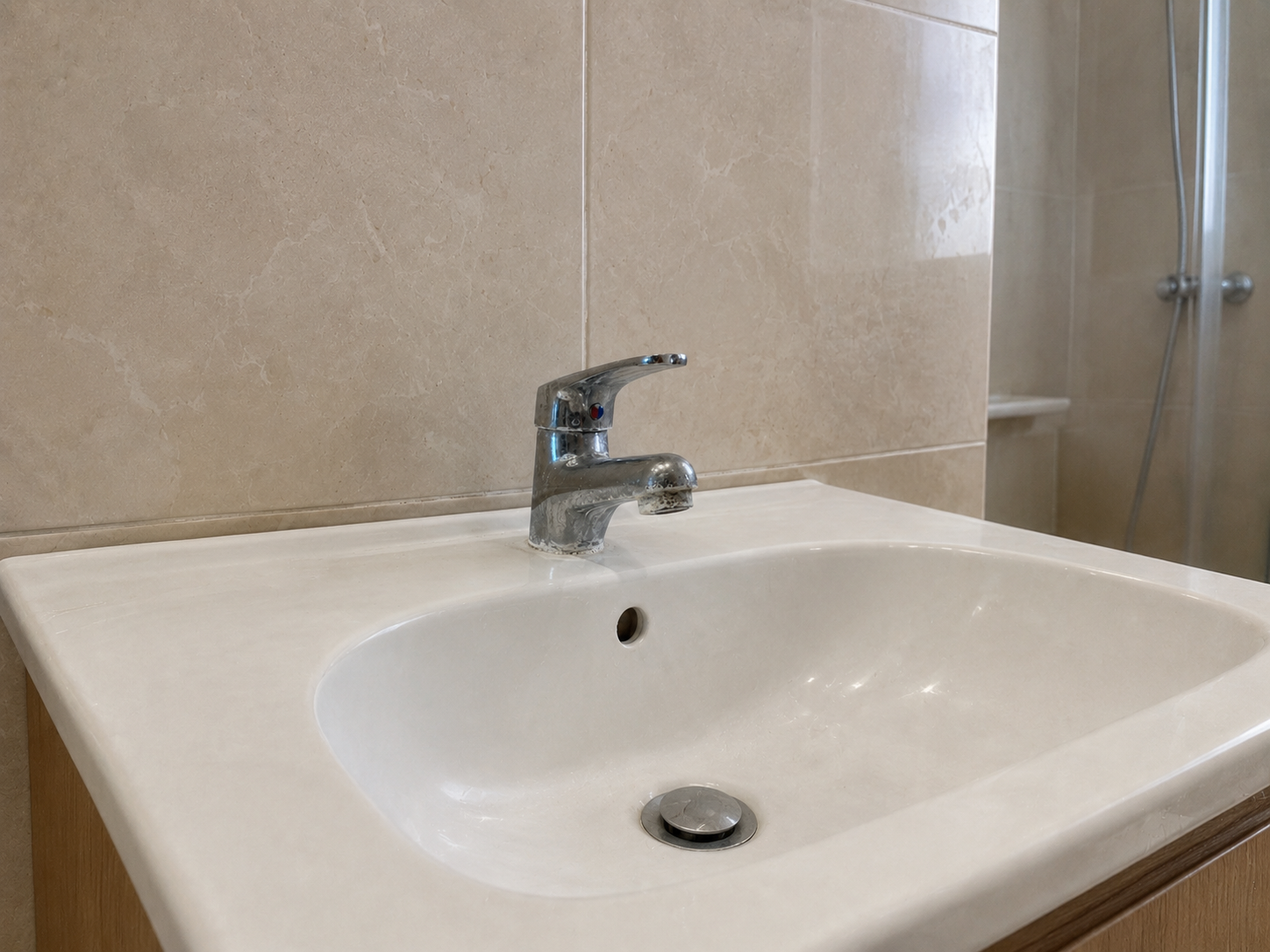
Běžná údržba bytu
What Is Usually Considered a Minor Repair
Regulation No. 308/2015 Sb. is not a long or complicated document. It is enough to read it calmly once to understand the principle. It lists the elements of the apartment and interior fittings for which a repair may be considered minor (drobná oprava). This category may include, for example, individual parts of floors, baseboards and thresholds, parts of doors and windows, fittings, handles, locks, internal blinds, switches, sockets, bells, intercoms, faucets, siphons, shower elements, washbasins, toilets, kitchen units, and built-in equipment, if it is part of the apartment and belongs to the landlord. It is always best to compare the detailed list with the current text of the regulation. (Zákony pro lidi)
One more thing is important: if the damage was caused by the tenant, members of their family, guests, or pets, then this is no longer only about a minor repair. It may be ordinary liability for damage caused. A broken glass shelf, a burned countertop, a torn-off cabinet door, or a damaged floor due to improper use should not automatically be shifted onto the owner just because the apartment is rented.
Table: How to Quickly Understand Who Pays
| Situation | How It Is Usually Classified | Who Usually Pays |
|---|---|---|
| Cleaning a siphon, clearing a blockage up to the vertical riser | Běžná údržba | Tenant |
| Painting walls after ordinary living, if the walls are noticeably worn | Běžná údržba | Tenant, unless the contract releases them |
| Replacing a handle, lock, fitting, internal blind | Drobné opravy according to the list | Tenant, taking into account the annual limit |
| Minor repair not on the list up to 1,500 Kč | Drobné opravy according to cost | Tenant, taking into account the annual limit |
| Repair after exceeding the annual limit of 150 Kč/m² | No longer a drobná oprava in that year | Usually owner |
| Breakdown due to age of equipment or a systemic defect | Not an ordinary tenant minor repair | Usually owner |
| Damage caused by the tenant themselves | Liability for damage | Tenant |
| Major renovation, replacement of risers, serious technical defect in the building | Obligation to keep the home fit for use | Owner |
Why It Is Better Not to Put Off Minor Work When Moving Out of an Apartment
The most unpleasant repair conflicts arise not at the moment of the breakdown, but when the apartment is handed back. The tenant expects the return of the deposit, the owner sees worn walls, minor damage, non-working elements, and starts calculating expenses. If these issues are not resolved in advance, the final amount is almost always perceived painfully.
From a practical point of view, it is more beneficial to arrange painting, carry out minor repairs, and put the apartment in order before handing over the keys. When the landlord takes care of this after the tenant moves out, they choose the tradesman, timing, materials, and organization of the work themselves. As a result, the amount may end up being higher than if the tenant had dealt with it in advance. In addition, there is a risk of a dispute over the deposit (kauce). Czech media also regularly point out that during the handover of an apartment, a protocol and photo documentation are important, because they are what help prove the condition of the housing at the time of move-in and move-out. (Aktuálně.cz)
We usually recommend approaching move-out not emotionally, but technically: go through the apartment with a checklist, check the walls, floors, plumbing, sockets, handles, furniture, household appliances, and the state of cleaning. If there is any doubt, it is better to discuss the specific point with the owner or property manager in advance. That is cheaper and calmer than arguing after the keys have already been handed over.
How a Tenant Should Act If Something Breaks
The first rule is not to stay silent. If the breakdown is serious and involves water, electricity, heating, or safety, the owner should be notified immediately. Even if the repair ultimately turns out to be the tenant’s responsibility, timely notice helps prevent greater damage.
The second rule is to document the condition. Photos, a short video, the date, a description of the problem, and the tradesman’s invoice often resolve more than a long exchange of messages without evidence.
The third rule is to check not only the amount, but also the nature of the repair. First, look at whether the breakdown falls within the list of minor repairs (drobné opravy) under Nařízení vlády č. 308/2015 Sb. Then check whether the annual limit of 150 Kč/m² has been exceeded. Only after that does it make sense to argue about who should pay. This procedure may seem formal, but in practice it saves money and nerves for both parties.
What Is Important for the Owner
For the owner, minor repairs are not minor either. If the lease agreement is drafted carelessly, if there is no handover protocol, if the condition of the apartment before move-in is poorly documented, even obvious damage may become disputable. In a quality rental arrangement, it is important not only to find a tenant, but also to set up clear rules in advance: what is included in the equipment, in what condition the apartment was handed over, how defects should be reported, who calls the tradesman, how costs are approved, and how the final handover takes place.
In rental management at Get Home, we try not to let such issues turn into conflict. The clearer the rules are at the start, the calmer the entire rental period will be. This is especially important for owners who live abroad or do not want to deal personally with everyday apartment issues.
Conclusion
Minor repairs in a rental apartment in the Czech Republic are governed not by feelings, but by specific rules. Section 2257 of the občanský zákoník establishes the general principle: the tenant carries out and pays for minor repair (běžná údržba and drobné opravy) connected with using the apartment. Nařízení vlády č. 308/2015 Sb. explains exactly what falls under this. Since 2026, a limit of 1,500 Kč per repair applies to some repairs, and the total annual limit is 150 Kč per m² of apartment area. (Beck-online)
The most sensible approach is not to wait for conflict. Check the list, document the condition of the apartment, keep invoices, report breakdowns on time, and put the housing in tidy condition before moving out. That way, a minor repair really remains a minor issue, rather than becoming the cause of a dispute over the deposit.
FAQ
Who pays for minor repairs in a rental apartment in the Czech Republic?
If under Czech law the repair falls under “běžná údržba” or “drobné opravy”, that is, ordinary care of the apartment or minor repairs, it is generally carried out and paid for by the tenant. At the same time, you need to take into account the list of repairs, the 1,500 Kč limit for cost-based repairs, and the annual limit of 150 Kč/m².
If the repair costs more than 1,500 Kč, does the owner always pay?
No. If the repair falls within the list of drobné opravy by substance, the amount of a single repair does not by itself decide the issue. The tenant’s total annual expense limit also matters.
Does the tenant need to paint the walls before moving out?
Not always automatically, but painting falls under the term “běžná údržba”. If the walls are noticeably worn, stained, or damaged through ordinary living, in practice it is often more выгодно to put them in order before handing over the apartment than to argue later about the deposit.
What should be done if the owner demands payment for a major repair?
You should ask for an explanation of why this repair is considered the tenant’s obligation, and compare the situation with Nařízení vlády č. 308/2015 Sb. If the matter concerns old equipment, a major defect, or a building problem, this is usually not a minor repair for the tenant.
Can it be agreed in advance that the tenant does not pay for minor repairs?
Yes, the contract may be more lenient for the tenant and release them from part of their obligations. But if there is no such release, the rules of the law and the government regulation apply.