


Residence Registration in Non-Residential Premises in the Czech Republic
There is one persistent myth surrounding residence registration in non-residential premises in the Czech Republic: if the cadastral record says jiný nebytový prostor, then it is impossible to register a place of residence there. We often encounter this opinion not only among buyers and tenants, but also among people who work professionally with real estate. In practice, the issue is more nuanced. What matters is not a single word in the cadastral extract, but the actual purpose of the property and the documents that can confirm that purpose.
Czech law does not say that a permanent residence can only be in a standard apartment. Section 10 of Act No. 133/2000 Coll. on the registration of residents states that a citizen may have only one permanent residence, and it must be an object with a popisné, evidenční, or orientační number that is intended for bydlení, ubytování, or individuální rekreace, that is, for housing, accommodation, or individual recreation (Zákon č. 133/2000 Sb.).
It is precisely the word ubytování that often changes the entire meaning of the situation. If the property is officially designated for temporary accommodation, then the mere fact that the unit is marked in the cadastre as non-residential does not yet settle the issue of residence registration. That is why in every specific case you need to check not only the title deed, but also the documents showing what the unit was actually designated for.
Why “Non-Residential Premises” in the Cadastre Does Not Always Mean a Ban on Residence Registration
A cadastral extract is important, but it does not always answer the main question. A unit may be listed in the cadastre as jiný nebytový prostor, which literally translates as “other non-residential premises.” For many people, the analysis ends there. But that approach often leads to the wrong conclusion.
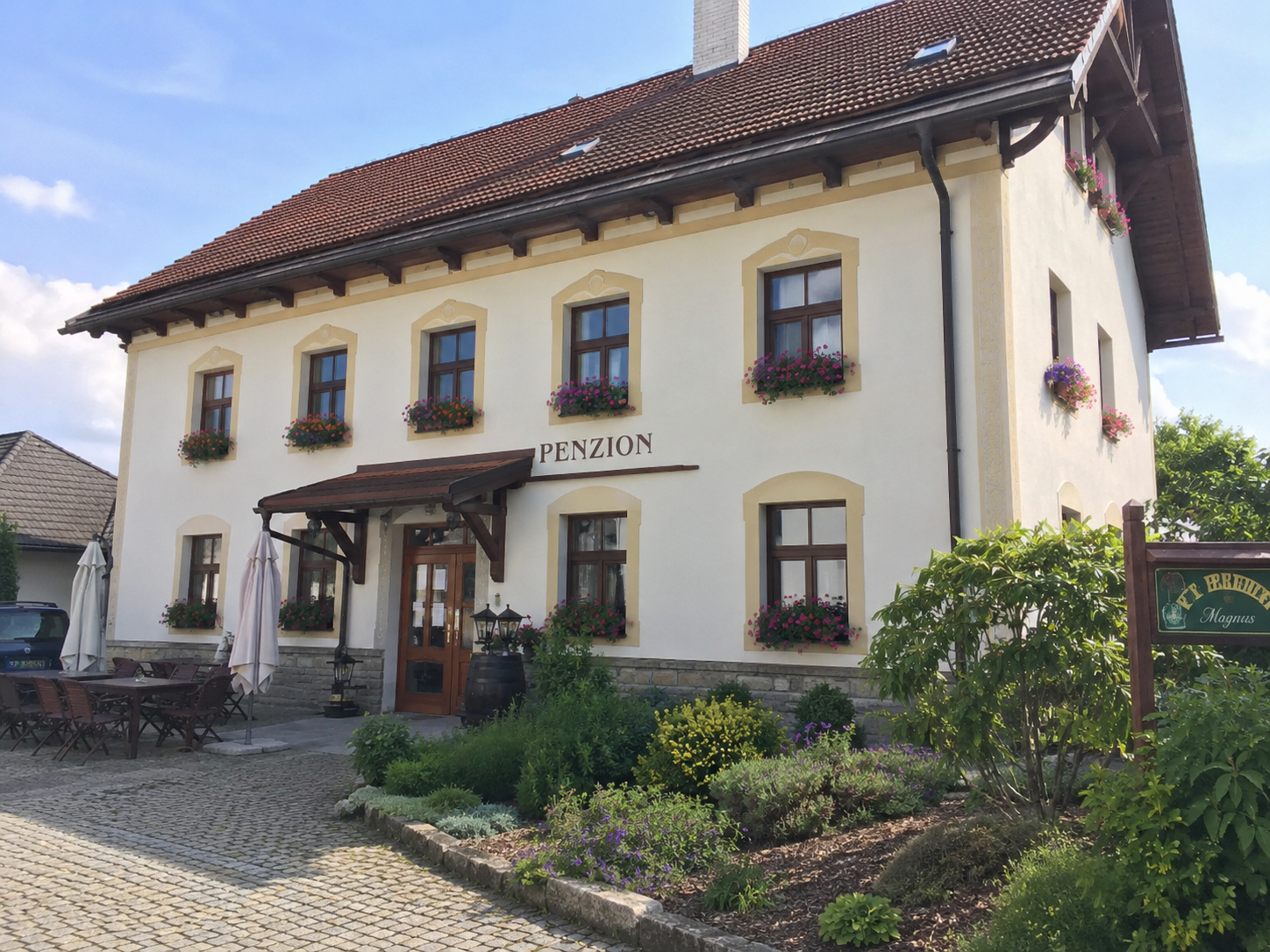
The cadastral vyhláška works with a limited set of unit use categories. It lists only 6 ways an object can be used: byt, ateliér, garáž, dílna nebo provozovna, jiný nebytový prostor, rozestavěná jednotka (Vyhláška č. 357/2013 Sb.). This is not a full description of the real-life purpose of the premises. A single broad category may include very different types of properties: an office, a shop, a warehouse, a service salon, a restaurant, a hotel apartment, or a room in a dormitory.
Ilustrační obrázek
That is why the phrase jiný nebytový prostor in itself does not prove that the premises cannot be used for accommodation. It only says how the unit is recorded in the cadastral register. But for residence registration, something else matters: the purpose for which the property may be used under building law, as reflected in the occupancy permit, also commonly referred to as “kolaudace.”
What the Authority Actually Checks When Registering an Address
When a person comes to change their permanent residence address, the authority needs to understand two things:
- first: whether the applicant has the right to use the premises,
- second: whether the property meets the conditions of the law governing permanent residence.
The official gov.cz portal states that when changing permanent residence (trvalý pobyt), a Czech citizen must prove their identity and their right to use the house, apartment, or residential premises. This can be done, for example, by a lease agreement, sublease agreement, accommodation agreement, or a similar document (gov.cz). The Ministry of the Interior also states that a document proving the right of use may be submitted, for example, a cadastral extract or a lease agreement, or the consent of an authorized person with a certified signature (Ministerstvo vnitra ČR).
And this is where a typical problem appears. A person brings only a cadastral extract stating jiný nebytový prostor. The official sees a non-residential category, but sees no proof that this is specifically an ubytovací jednotka or another property intended for accommodation. In such a case, a refusal is often connected not with the fact that residence cannot be registered in non-residential premises, but with the fact that the applicant did not bring sufficient documentation.
The Key Document: Prohlášení vlastníka
In practice, the key document is often the prohlášení vlastníka, that is, the owner’s declaration. This is the document in which the individual units in the building were originally defined: what they are, where they are located, how they are designated, and for what purpose they are intended. If the declaration shows that a specific unit is an ubytovací jednotka, that is much stronger than a single line in a cadastral extract.
Put simply, the cadastral extract shows the recorded category of the unit, while the prohlášení vlastníka helps clarify what it actually is in substance. That is why when buying, selling, renting, or trying to register an address in such a unit, we always recommend looking deeper than the first page of the title deed.
A copy of the documents from the sbírka listin can be obtained through the cadastre. ČÚZK states that data from the collection of documents is provided in the form of a simple or certified copy, and the applicant must prove their identity (ČÚZK). For submission to the registration authority or to OAMP (Odbor azylové a migrační politiky), it is usually safer to obtain a certified copy (ověřená kopie) so that the authority has no doubts about the authenticity of the document.
Where Residence Registration Is Possible and Where the Risk of Refusal Is Higher
| Type of Property or Unit | What Is Usually Listed in the Cadastre | Can It Be Considered for Residence Registration | What to Check First |
|---|---|---|---|
| Standard apartment | byt | yes | Cadastral extract, right of use, lease agreement, or ownership |
| Ubytovací jednotka | usually jiný nebytový prostor, sometimes ateliér | Yes, if the purpose is confirmed | Prohlášení vlastníka, kolaudační documents, accommodation agreement, or lease |
| Hotel apartment | often jiný nebytový prostor | Possible if it is an object for ubytování | The purpose of the property and the specific unit |
| Room in a dormitory | may be ubytování within the property | Possible if there is a right of use | Accommodation agreement |
| Cottage or recreational property | object of individual recreation | Possible if the legal conditions are met | The property number and designation for individuální rekreace |
| Ateliér | ateliér | Depends on the purpose | You need to check whether it is an administrative atelier or an ubytovací jednotka |
| Office, warehouse, salon, provozovna | jiný nebytový prostor or provozovna | no | Actual purpose, kolaudace, Prohlášení vlastníka |
Special Case: Studio (ateliér)
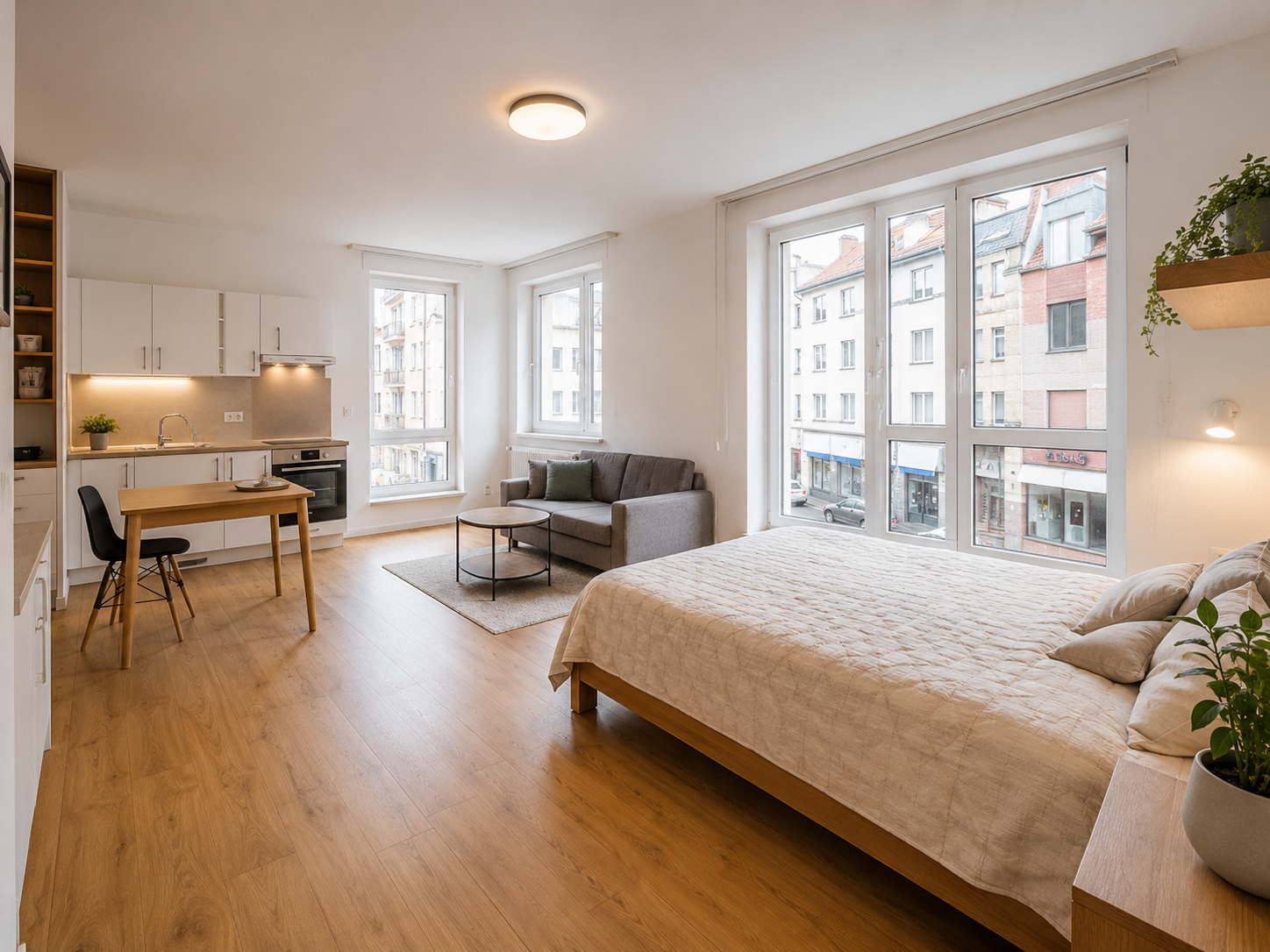
The word ateliér also does not provide an automatic answer. Sometimes such premises are genuinely intended for work, administrative use, or creative activity. In that case, counting on residence registration is risky. But in some projects, a studio may in fact be connected with accommodation, and then you need to look at the documents, not the label.
That is why we do not recommend drawing conclusions based on a single word. If the cadastre says ateliér, you need to obtain the prohlášení vlastníka and other documents relating to the building. If they show that the unit is intended for administrativní činnosti, residence registration will be problematic. If, however, the documents confirm that it is intended for accommodation, the situation may be different.
Ilustrační obrázek
What Foreigners Should Do: OAMP and Notification of Changes
For foreigners, the issue of an address is connected not only with everyday convenience, but also with immigration obligations. The foreigners’ portal states that a change of address can be reported in person, by post, through an official electronic mailbox (datová schránka), by e-mail with a recognized electronic signature, or through a representative (Informační portál pro cizince). For third-country nationals, when changing address there is also an obligation to prepare documents, including proof of accommodation and the notification-of-change form (Informační portál pro cizince).
If we are talking about an accommodation unit (ubytovací jednotka), a foreigner should attach not only the agreement or proof of accommodation, but also a certified copy of the relevant part of the prohlášení vlastníka, showing that the specific unit is intended for accommodation. This reduces the risk of a formal refusal or a request for additional documents.
Why This Topic Matters When Buying Real Estate
For a buyer, the difference between a bytová jednotka and an ubytovací jednotka is not a minor detail. It may affect address registration, a mortgage, the liquidity of the property, taxes, how future tenants perceive the property, and the resale strategy. Sometimes an ubytovací jednotka can be a sensible solution, especially if the price is lower, the location is strong, and the documents are clean. But buying such a property “by eye” is dangerous.
At Get Home, when reviewing such properties, we look not only at the price and layout, but also at the documents, because that is where the answer to the main question lies. In our practice, there have been dozens of transactions, leases, and sales of ubytovacích jednotek where, with properly prepared documents, address registration went through successfully. But preparation is crucial: a cadastral extract, the agreement, the owner’s consent where necessary, and a certified copy of the prohlášení vlastníka.
Practical Checklist Before Residence Registration
1. Do not draw conclusions based only on the cadastre
If the extract states jiný nebytový prostor, that is not the final verdict. You need to understand what kind of non-residential premises it is: an office, a shop, a warehouse, or an ubytovací jednotka.
2. Obtain the prohlášení vlastníka
Request a copy of the document from the cadastre or through the available ČÚZK services. For submission to the authority, it is better to use a certified copy, since ČÚZK expressly states the possibility of obtaining a simple or certified copy of documents from the sbírky listin (ČÚZK).
3. Check the wording of the purpose
Look in the document for wording such as ubytovací jednotka, ubytování, případně jiné indications of accommodation. If it states an administrative or commercial purpose, it will be harder to count on residence registration.
4. Prepare a document proving the right of use
For Czech citizens, this may be a lease agreement, sublease agreement, accommodation agreement, proof of ownership, or the consent of an authorized person. The official gov.cz portal expressly states that the right of use can be proven, for example, by a “nájemní smlouva”, “podnájemní smlouva”, “smlouva o ubytování”, or a similar document (gov.cz).
5. For foreigners, attach the documents to the notification
It is better to send OAMP a full package: the notification form, the accommodation document, and confirmation of the purpose of the unit. The clearer the document file, the lower the risk that the case will get stuck on a formal issue.
Conclusion
Residence registration in non-residential premises in the Czech Republic is not always possible, but there is no automatic ban either. The main mistake is that people treat jiný nebytový prostor as the final answer. In reality, this is only a cadastral category that may hide different types of premises.
If the property is intended for ubytování or individuální rekreace, and this is confirmed by documents, address registration may be possible. But this must be proven not by words, but by documents relating to the property. That is why before buying or renting such a unit, it is worth carrying out a documentary review in advance, rather than waiting until the authority has already issued a refusal.
FAQ
Can you register residence in jiný nebytový prostor?
Sometimes yes. The designation jiný nebytový prostor by itself does not answer the question of residence registration. You need to check whether the specific unit is a property intended for ubytování, or whether it is an office, warehouse, salon, shop, or another commercial property.
Why was I refused if the property actually looks like an apartment?
Because the outward appearance of the premises is not the main proof. For the authority, documents matter. If you brought only a cadastral extract saying non-residential premises, but did not confirm that it is intended for accommodation, a refusal is entirely possible.
What is more important: the cadastral extract or the prohlášení vlastníka?
Both documents are important, but for understanding the purpose of a unit, the prohlášení vlastníka often provides more information. The cadastre shows the recorded category, while the owner’s declaration helps reveal the technical purpose of the unit.
Can you register residence in a studio (ateliér)?
It depends on the purpose. If it is a studio for administrative or creative activity, residence registration is not possible. If the documents show it is an ubytovací jednotka, that is, an accommodation unit, then residence registration is possible.
Do you need a certified copy of the prohlášení vlastníka?
For dealing with authorities, it is better to use a certified copy (ověřená kopie). A simple copy may help for a preliminary review, but a certified copy looks more convincing in an official filing.
Can a foreigner register an address in an “ubytovací jednotka”?
Yes, if there is a document confirming accommodation and if the purpose of the property meets the requirements. For OAMP, it is important to prepare a clear set of documents and confirm not only the right of use, but also the purpose of the unit.