


Metropolitní plán 2026: How Prague’s New Plan Will Change Development and the Housing Market
On September 1, 2026, Prague’s new zoning plan (Metropolitní plán 2026) came into effect, replacing the document from 1999. Its preparation began in 2012 and took almost 14 years. During that time, the city held three major rounds of public consultation and processed more than 78 thousand comments and proposals.
For the real estate market, the significance of this event is difficult to overstate. The new plan determines where the city may develop, how intensive development can be, and where new public spaces, schools, parks, and transport infrastructure should be created. One of its central priorities is the development of Prague’s large internal reserves, especially former industrial and transport areas, in other words brownfields.
But one common misconception needs to be cleared up immediately. Metropolitní plán does not mean that developers automatically received permission in September to build hundreds of thousands of apartments. The plan creates an urban planning opportunity for an area to be developed, but each individual project still has to go through design, infrastructure coordination, land-related issues, and the necessary permitting procedures.
That is why the impact of the new plan on housing prices and affordability will be gradual. In our view, the first truly noticeable results should not be sought in the statistics for September or October 2026, but over the next several years.
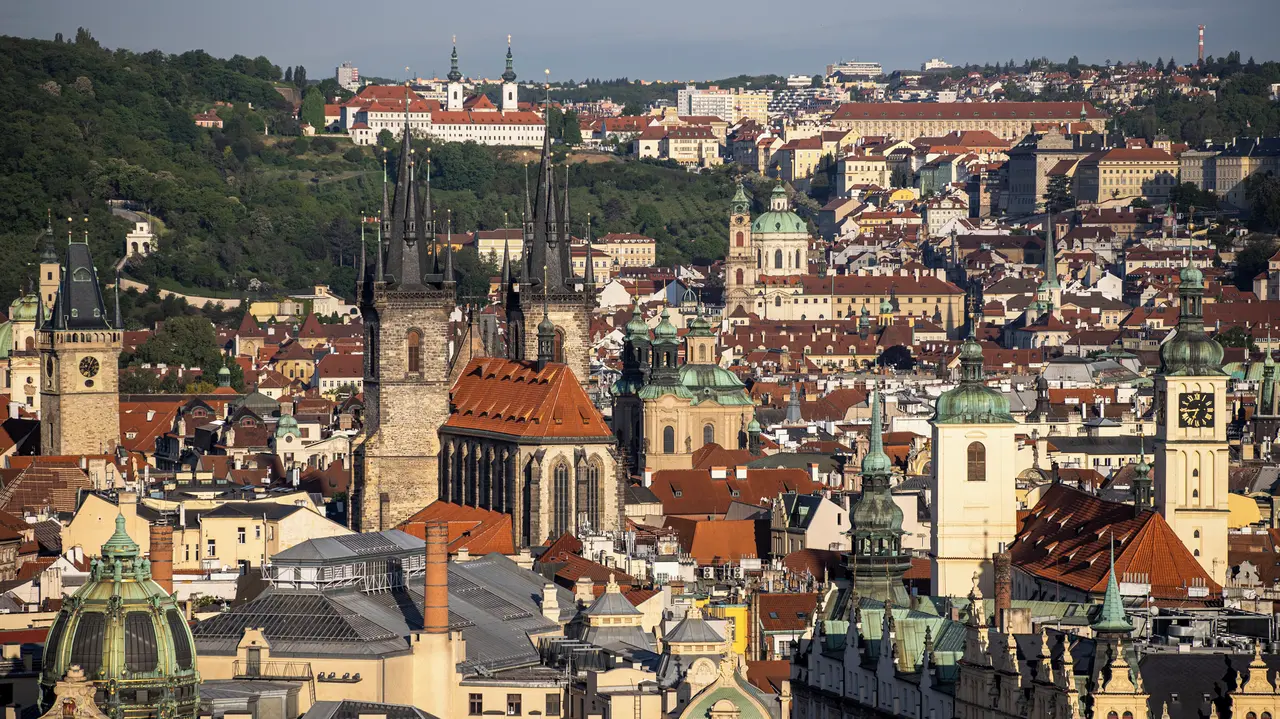
Illustrative photo
What Is Metropolitní plán Praha and What Changed on September 1, 2026
A zoning plan (územní plán) can be thought of as a set of basic rules governing the development of a city. It does not say exactly which building must be constructed on a particular plot, but it determines whether development is permitted there at all, what scale it may have, and what functions and restrictions must be taken into account.
Prague City Assembly approved Metropolitní plán on May 28, 2026, and it came into effect on September 1, 2026. The new plan changes the very approach to planning the city, not merely the markings on a map.
The old document defined the functional use of individual plots in great detail. The new plan pays more attention to the structure and character of the city: the scale of development, building heights, streets, public spaces, transport connections, and how a new district interacts with its surroundings.
For the first time, building height regulation is being introduced systematically across all of Prague. The plan also determines the intensity of use of individual areas, protects important green zones and city panoramas, and reserves space for key transport projects.
For the real estate market, this means a clearer starting point. A landowner, investor, municipality, and local resident should be able to better understand not only whether construction is possible somewhere, but also what scale of development the city considers acceptable.
Another important detail concerns projects that entered the permitting process before September 1, 2026. A transitional regime applies to them. If an application was submitted to the building authority before Metropolitní plán came into effect, the procedure may in certain cases continue under the previous zoning plan. Therefore, when assessing a specific development, it is not enough simply to open the new map and draw a conclusion. The stage of the project itself must also be known.
Why Prague’s Old územní plán No Longer Matched the City
The 1999 plan was created for a different Prague. Over a quarter of a century, land values, housing requirements, transport, the economy, employment patterns, and the very idea of how a modern European capital should develop have all changed.
One of the main problems with the old plan was excessively detailed functional zoning. IPR states that it contained more than 90 types of areas. On paper, such detail was supposed to provide precision. In practice, the opposite problem arose: whenever the city’s needs changed, a separate amendment to the document was required.
Between 2000 and 2012 alone, 2060 amendments to the zoning plan were considered. And these amendments were requested not only by major investors. They could also be needed by the municipality for a new school or kindergarten, or by the owner of a small property. IPR itself notes that each such procedure requires time and money and can postpone construction preparation for several years.
This created a paradoxical situation: the plan was supposed to provide the city with stable rules, but thousands of exceptions and amendments gradually turned it into a document that constantly had to be corrected.
This was not free for the public administration either. Specialists who could have been working on strategic planning, infrastructure, or new districts spent a significant share of limited administrative resources processing yet another amendment to the old document.
Metropolitní plán attempts to move away from this logic. There should be fewer rules, but they should be clearer and flexible enough that the city does not need to amend the zoning plan every time a specific use of a plot differs slightly from assumptions made in the late 1990s.
Changes to the new plan will still be possible in the future. The law does not allow a zoning document to be created “forever.” However, the methodology behind Metropolitní plán is designed so that the need for constant site-specific amendments should arise much less often.
Why Prague Wants to Grow Inward Rather Than Expand Further
One of the key principles of the new plan is what IPR calls a “return to the center” (návrat ke středu). This does not mean building over the historic center or filling every free courtyard. The idea is different: before expanding Prague further into the surrounding landscape, it makes more sense to use large reserve areas that already exist within the city.
From the perspective of urban economics, this is logical.
When a city stretches further and further outward, new districts require an expansion of roads, sewers, water supply, electricity networks, public transport, street cleaning, lighting, and many other services. The lower the development density and the farther it is from the existing urban structure, the more infrastructure must be maintained for a relatively small number of residents.
For this reason, Metropolitní plán 2026 limits further uncontrolled urban sprawl into the surrounding landscape and shifts a significant share of potential new development to vacant and underused sites within Prague. These primarily include areas along railways and former industrial zones, which historically occupy vast areas in relatively central parts of the city.
This is an important distinction: urban densification under the new plan does not mean building on every available green space. At the same time as internal reserves are developed, the document identifies areas of urban nature, protects existing greenery, and establishes rules for stabilized districts.
Prague Brownfields: Where Space for New Districts Will Emerge
A brownfield is an area that was previously used for industry, railways, warehouses, or other infrastructure but has gradually lost its original function. In Prague, many such areas are located not on the distant periphery, but almost within the established city.
That is precisely why their development is so important for the housing market.
Instead of building a new district beyond the boundary of the existing urban structure, tens of hectares of land can be used close to the metro, trams, railways, jobs, and already established neighborhoods.
The most notable development areas include Nákladové nádraží Žižkov, Bubny-Zátory in Holešovice, Rohanský ostrov, the surroundings of Smíchovské nádraží, Palmovka, Kolbenova, and Florenc.
At the same time, it would be incorrect to claim that all these areas were completely blocked before September 1, 2026 and suddenly became available for construction. Some projects are already being developed, others were previously enabled through individual amendments to the old zoning plan, and in some areas urban planning studies (územní studie) and separate agreements already exist.
The significance of the new plan lies rather in the fact that these areas are, for the first time, being given a more comprehensive long-term development framework instead of dozens of fragmented amendments.
Nákladové nádraží Žižkov: How the Old Plan Held Back a Major Area
The former Žižkov freight railway station is one of the best examples of the problems of the old system.
After its original function ended, the huge area almost in the center of Prague had obvious potential for housing. But for comprehensive development, the zoning plan had to be amended and a new urban planning concept agreed.
Only on April 24, 2025 did the city approve what was at that time Prague’s largest zoning plan amendment, opening the way for comprehensive development of the area. Preparation took many years. According to the city’s plans, the new district could accommodate around 20 thousand residents, with schools, kindergartens, parks, and other infrastructure planned alongside housing.
These are precisely the kinds of cases that the new Metropolitní plán is intended to make less difficult. Not in the sense that any developer will now be able to quickly build whatever they want, but in the sense that the city defines the direction of development and its basic parameters in advance.
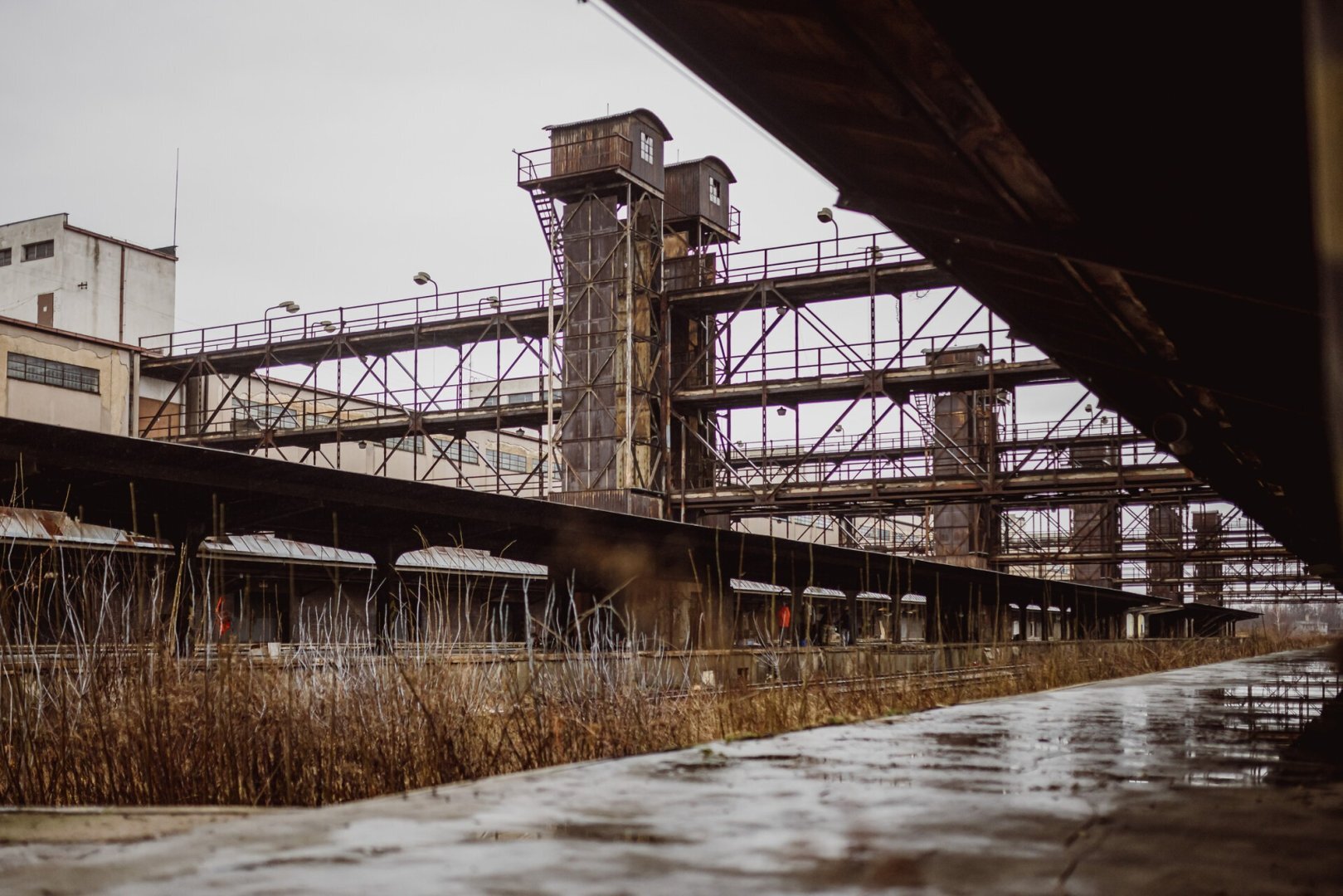
Source: IPR Praha
Bubny-Zátory: A New District Within Existing Prague
An even larger example is Bubny-Zátory between Holešovice and Letná.
According to IPR materials, the area is planned for approximately 11 000 apartments and 25 000 residents. Around 29 000 jobs, approximately 5 000 school places, a central park of about six hectares, and new transport infrastructure are planned here. The development horizon for the area extends to 2040.
These figures clearly show why the discussion of brownfields cannot be reduced to the number of apartments alone. If tens of thousands of residents are to move into a former railway area, streets, schools, parks, shops, public transport, and jobs must appear at the same time.
Otherwise, the city does not get a new district, but a large residential estate overloading the old infrastructure.

Source: IPR Praha
Smíchov, Rohanský ostrov, and Other Areas: The Process Is Already Underway
Smíchov shows another side of the issue. The transformation of former railway areas here began long before the Metropolitan Plan came into effect. The Smíchov City project includes almost 400 000 m² of residential, office, commercial, and public space, and its implementation is planned over many years.
This is a useful example because it dispels another myth: the new zoning plan is not launching every Prague project “from scratch.” Some areas are already undergoing active transformation.
Rohanský ostrov, Palmovka, Kolbenova, and Florenc are at different stages of development and have different urban planning conditions. What matters for the real estate market is the common principle: Prague is prioritizing the transformation of large internal areas, rather than relying only on outward expansion.
That is why buyers today should look not only at what is currently outside their windows, but also at what function Metropolitní plán assigns to the surrounding plots. A vacant lot, warehouse, or railway area may become part of an entirely new district within a few years.

Source: IPR Praha
Prague’s New Development Plan: What Will Change for Developers
A large district cannot be built from buildings alone. If a project adds several thousand apartments, it simultaneously creates demand for schools, kindergartens, streets, parks, and public transport.
In the past, negotiations over who should contribute what amount to such infrastructure could be less predictable. Even before the new plan came into effect, Prague had started using a methodology for financial participation by investors. It allows the developer’s contribution to be calculated according to more transparent rules. The new zoning plan did not create this model, but it makes it particularly important for large-scale development.
In practical terms, this means the following: if a private project substantially increases the value and burden of an area, the city expects the investor to participate not only in the construction of commercially saleable floor area, but also in creating the environment around it.
One form of such cooperation may be a planning agreement (plánovací smlouva), which sets out the obligations of the parties, development phases, infrastructure, and other conditions.
At Nákladové nádraží Žižkov, a similar model is already being used: development of the area is linked to agreements on investor participation in public infrastructure.
| What Is Changing | Old Approach | New Approach | Practical Effect |
|---|---|---|---|
| Zoning plan logic | Detailed functional division of plots | Greater emphasis on the structure and character of the city | Less need to constantly amend the plan |
| Brownfield development | Many areas required lengthy individual amendments | Large internal reserves are included in an overall development concept | Greater predictability for major projects |
| Building height | No unified citywide height regulation system | Height parameters are defined systematically | Buyers and investors can more easily assess future development |
| Prague’s growth | Pressure to expand the city outward | Priority given to developing internal reserves | More efficient use of existing infrastructure |
| Developer participation | Conditions could be negotiated project by project | A stronger role for transparent methodology and planning agreements | Infrastructure can be linked to new development more easily |
| Housing supply | Large areas could wait years for zoning amendments | Planning capacity is created for new districts | Potentially more projects in the long term |
| Construction speed | An amendment to the územní plán could be a separate multi-year stage | Some planning barriers should disappear | This speeds up only one stage, not the entire permitting process |
How Metropolitní plán Will Affect Apartment Prices in Prague
After the figure of 350 000 apartments was published, it is easy to draw an overly simple conclusion: “If that much housing has been allowed, apartments will soon become cheaper.”
In practice, the relationship is much more complicated.
IPR does indeed state that the new plan creates planning capacity for new districts in which up to 350 000 apartments could potentially be built. But this is not a construction plan and not a list of projects that have already been approved.
A zoning plan answers only one of the first questions: whether the city permits a certain type of development in a particular location. After that, a specific project still has to go through a long chain of preparation.
Ownership structure has to be resolved, the project designed, infrastructure agreed, more detailed urban planning documentation prepared where necessary, permits obtained, financing secured, and only then can construction begin.
It is therefore wrong to expect a noticeable fall in apartment prices simply because the new zoning plan has come into force.
Its impact should be different and more gradual: increase the amount of land with clearly defined development potential, reduce some planning uncertainty, and create conditions for greater housing supply in the future.
If more projects emerge and they are able to reach the construction stage more quickly, this could ease the shortage of supply and therefore reduce upward pressure on prices. But housing prices are determined by much more than the amount of permitted development. Interest rates, the cost of financing and construction, land prices, demographics, household incomes, and investment demand all have an impact.
We discussed these factors in detail in a separate article “Why Real Estate Prices Are Rising in Prague”.
A more realistic scenario is therefore the following: Metropolitní plán will not make Prague apartments cheaper immediately, but if the other parts of the system function properly, it may increase the number of projects over the next several years and make the supply side of the market less constrained.
Building Permits in Prague: Why the New Plan Will Not Solve the Housing Crisis on Its Own
In our view, this is one of the most important conclusions of the entire topic.
Prague’s problem was not limited to the old zoning plan. The slow response of supply to demand is also linked to lengthy permitting procedures, coordination between numerous authorities, infrastructure, land ownership, appeals, and the complexity of large projects.
Metropolitní plán fixes an important layer of this system, but only one layer.
It can eliminate the need to spend years seeking a zoning plan amendment in places where the city already considers development desirable. But after that, the project still has to actually obtain permission.
Recent data from the Czech Statistical Office (ČSÚ) clearly shows why an immediate effect should not be expected. In the second quarter of 2026, construction began on 2 788 apartments in Prague, 59,2 % more than a year earlier. At the same time, the number of issued building permits and notifications fell by 20,1 % year on year. For residential buildings, the decrease was 29,7 %.
It should be clarified immediately that the number of permits is not a direct measure of the average duration of the permitting process. One large project and several small properties cannot be mechanically compared by counting documents. But the statistics are a useful reminder of how unevenly the construction market develops.
The claim that “the new plan has come into force, therefore the housing crisis is solved” does not stand up to scrutiny.
It is more accurate to say that Metropolitní plán removes one of the systemic bottlenecks on the housing supply side. If the permitting system also improves, Prague’s large internal areas may genuinely be able to move from plans to actual projects more quickly.
If the other stages remain just as slow, part of the enormous potential of the new plan will continue to exist mainly on the map for a long time.
How to Check Metropolitní plán Before Buying an Apartment in Prague
For property buyers, the new plan is useful not only as major news about Prague’s future. It can also be used in a very practical way.
An interactive map is already available on the official Prague geoportal. It allows users to overlay different layers, view the sheet for a specific area, and study the binding textual part of the plan.
Before buying an apartment, we recommend looking not only at the building itself, but also at the surrounding plots.
It is particularly important to check:
- Whether the neighboring area is classified as stabilized or transformational. A vacant site in a transformation area may change far more dramatically in the future than it appears today.
- What building height and development intensity are permitted nearby. A view from the window over an open space today does not guarantee the same view in five years.
- Whether new transport infrastructure is planned. A tram line, railway project, or major road can both increase the attractiveness of an area and significantly change the immediate surroundings of an apartment.
- Which public spaces and green areas are protected by the plan. It is important to distinguish between a park designated by the plan and a simply undeveloped private plot.
- What stage specific projects have reached. Planning potential, an urban planning study, a submitted application, and an already permitted project are completely different stages.
When assessing the future of an area, we recommend looking even more broadly and checking not only Metropolitní plán, but also planned public transport development. A new metro station, tram line, or rail connection can significantly change the attractiveness of a location, travel time to the center, and, in the longer term, buyer interest in property in that area.
For example, in the article “Prague Districts and Metro D: Where to Look for an Apartment With the New Line in Mind”, we explained why apartment buyers should consider not only today’s transport accessibility, but also approved plans for metro development. Combined with the new plan, such an analysis gives a much fuller picture of how a particular part of Prague may change in the coming years.
At the same time, Metropolitní plán does not replace an ownership check. To understand who owns a plot, which rights are registered against it, and exactly what is entered in the register, the real estate cadastre (katastr nemovitostí) is required.
We explained separately how to read this information in the article “Real Estate Cadastre in the Czech Republic: What It Shows, What It Does Not Resolve, and How It Protects the Owner”.
For a buyer, it is particularly useful to combine the two sources: the cadastre shows the legal status of a property today, while Metropolitní plán helps explain how the surrounding area may develop tomorrow.
What Will Change in Prague Over the Next 2–3 Years
The most interesting question is simple: when will we see a real effect?
We would not expect a major shift in the market in 2026 or early 2027. The construction cycle is too long.
The first period after the new plan comes into effect will be spent on adaptation. Developers will need to compare their projects with the new rules, revise documentation where necessary, and agree on details concerning areas and infrastructure. Building authorities will also begin developing practical experience with the new document.
Over the 2027–2029 period, the effect may become much more noticeable.
This does not necessarily mean thousands of already completed apartments. Earlier indicators will include new projects moving from an uncertain planning stage into design and permitting procedures, planning agreements being signed, further phases of major districts being launched, and an increase in specific investment proposals for areas that were previously difficult to develop.
This is where large areas in Prague’s wider center may finally begin moving forward.
At the same time, Nákladové nádraží Žižkov, Bubny-Zátory, Smíchov, Rohanský ostrov, and other areas have different histories and different starting points. It would be incorrect to say that a green light switched on simultaneously for all of them on September 1.
But the overall direction is now much clearer: the city has officially chosen the development of internal reserves as one of the main sources of future housing.
For the real estate market, this is also important from an investment perspective. An area in the early stages of a major transformation can change significantly over several years: streets, schools, parks, transport, commercial premises, and a new public environment may appear. On the other hand, buyers must take into account years of construction, noise, changing views, and temporary pressure on existing infrastructure.
The mere presence of a large project nearby should therefore not automatically be viewed as either an advantage or a disadvantage. The quality of the concept, timetable, transport links, and the specific position of the property within the area all need to be considered.

Source: Seznam Zprávy – Shipwreck-shaped skyscraper. The building is expected to be 125 meters tall, with the shipwreck another ten meters higher.
Practical Conclusion
Metropolitní plán 2026 is not a magic button that will instantly eliminate Prague’s housing shortage. But it is one of the most significant changes to the rules governing the city’s development in recent decades.
Prague is no longer relying on the 1999 zoning plan, which required thousands of amendments over the years and in many cases ceased to reflect the city’s real needs. The new document focuses on more flexible regulation, a clear urban structure, height restrictions, protection of important green areas, and the development of major internal reserves.
Brownfields are particularly important. They contain the potential for major new districts without endlessly expanding Prague further into the surrounding landscape.
But there is still an enormous distance between “construction is permitted here” and “a new building has been completed here.”
The biggest mistake now would be to interpret the figure of 350 000 apartments as the amount of housing that will soon enter the market. It is only theoretical planning capacity. The actual number of apartments built and the speed at which they appear will depend on permitting procedures, infrastructure, financing, project economics, and the city’s ability to reach agreements with investors.
An immediate impact on housing affordability should therefore not be expected.
It is much more realistic to view the next 2–3 years as a period in which it will become clear whether the new plan has genuinely unlocked preparation for major districts. If the permitting system also improves, Metropolitní plán could become one of the factors that gradually increases housing supply and reduces the structural shortage of new development.
For buyers, however, the new plan is already useful today. Before buying an apartment in Prague, it makes sense to check not only the condition of the building and the cadastral entry, but also the future of the surrounding area. Sometimes the plot across the street may ultimately have a greater impact on quality of life and property value than the condition of the common areas or a new kitchen.
At Get Home, we recommend treating Metropolitní plán not as an abstract municipal document, but as another tool for understanding what a specific area may look like in five, ten, or fifteen years.
FAQ About Metropolitní plán 2026
What Is Metropolitní plán Praha?
It is the capital’s new zoning plan (územní plán), which defines the basic rules for Prague’s future development: where construction is permitted, how large-scale it may be, where green areas should be preserved, and where infrastructure is planned. It replaced the 1999 plan on September 1, 2026.
Is It True That the New Plan Will Allow 350 000 Apartments to Be Built?
The plan creates areas with potential capacity for approximately up to 350 000 apartments. But this does not mean that all of them will necessarily be built. The zoning plan creates an urban planning opportunity, while every specific project still has to go through subsequent preparation and permitting stages.
Will Apartment Prices in Prague Fall After the Plan Comes Into Effect?
There are no grounds to expect an immediate fall in prices. The impact may appear through increased housing supply in subsequent years. At the same time, prices depend not only on new construction, but also on demand, interest rates, land prices, financing, and construction costs.
What Is a Brownfield in Prague?
It is a former industrial, transport, warehouse, or other area whose original function has disappeared or significantly declined. Such areas can be transformed into new mixed-use urban districts with housing, jobs, parks, and infrastructure.
Which Prague Areas Are Most Closely Connected With Brownfield Development?
The best-known examples include Nákladové nádraží Žižkov, Bubny-Zátory, Rohanský ostrov, and the areas around Smíchovské nádraží. Other major transformation areas include Palmovka, Kolbenova, and Florenc. However, the stage of preparation and the role of the new plan differ from one area to another.
Does a Developer Have Permission to Build if the Site Is Designated for Development in Metropolitní plán?
No. Compliance with the zoning plan is only one of the conditions. A specific project must still go through the required permitting procedure and comply with infrastructure and other requirements.
What Happens to Projects Started Before September 1, 2026?
A transitional regime applies to some procedures that had already begun. If an application for project approval was submitted before the new plan came into effect, the case may be completed under the rules of the previous zoning plan. The specific stage of the project must therefore always be checked.
Can You Check What Might Potentially Be Built Near an Apartment?
Yes. The official Metropolitní plán map allows users to view an area, its parameters, related layers, and the binding parts of the document. However, the map shows urban planning possibilities, not a guaranteed list of future developments.
Can Metropolitní plán Be Changed in the Future?
Yes. The law permits amendments to a zoning plan. The difference is that the new document was specifically designed to be more flexible, so that constant amendments should be needed less often than under the old system.
When Will the New Plan’s Impact on the Housing Market Become Noticeable?
The first signs can be expected over the next several years, particularly in the number of projects moving into more concrete stages of preparation. A substantial increase in the number of completed apartments will take longer because the full cycle of a major residential development takes years.