


Real Estate in the Czech Republic: Developer Pavel Malyshev on Prague Apartment Prices, Construction and Investment
Pavel Malyshev – Doctor of Economics, honorary doctorate holder, developer with more than 20 years of experience and owner of the Czech development company PrecoGroup. The company’s portfolio includes more than 400 apartments with a total value exceeding CZK 1 billion.
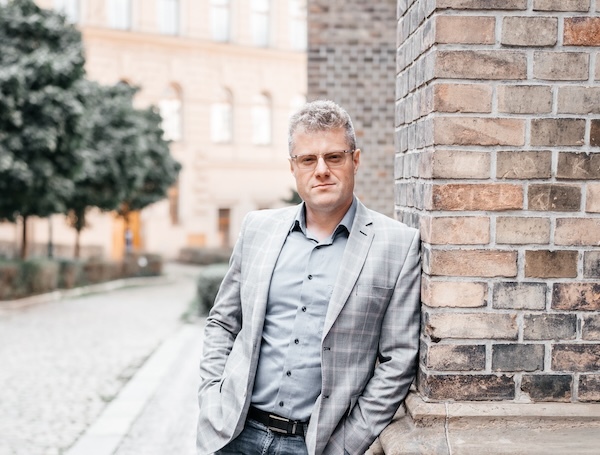
Photo: Pavel Malyshev, PrecoGroup
Pavel Malyshev was interviewed by Alesya Bigun, real estate agent and owner of the GetHome real estate agency. They discussed how residential developments are created in the Czech Republic, why construction can be delayed for ten years, who finances new-build projects, and what is happening in Prague’s real estate market. They also talked about buying apartments with cryptocurrency, modern housing cooperatives, and the prospects for further price growth.
This material is provided for informational and entertainment purposes and does not constitute legal or financial advice.
Does a Developer’s Background Matter in the Czech Republic?
There is a view that it is harder for someone with a foreign first and last name to succeed in the Czech Republic. You are not Czech and you work constantly with banks, partners and contractors. Have you encountered difficulties because of your background?
I believe professionalism and the expertise a person can offer their partners are far more important here.
If you look at the companies operating in Prague’s development market, you will see a wide variety of names and backgrounds. Austrian, Israeli and other foreign companies operate here. You cannot say that the Czech market is open exclusively to Czechs.
The market primarily tests competence, the ability to adapt to its conditions and the ability to navigate it. A first and last name may play some role, but it is far from being the decisive factor.
A real estate agent I know told me about a project that sold poorly while the company’s founders had Ukrainian names. Negative comments appeared on social media. After a Czech manager was appointed to run the company, sales improved. Can that really happen?
I would look at that situation in the context of how the market was changing.
It is quite possible that the product initially did not match buyers’ price expectations or current demand. While the owners were deciding whether to change the manager, time passed, prices rose and supply decreased. As a result, apartments that had previously been difficult to sell became more liquid.
I have been following the Czech market since 2008. During the crisis, around 80% of developers disappeared from the market. In many cases, the reason was that their product did not meet buyers’ expectations, including in terms of layouts and price.
So I would not attribute the improvement in sales exclusively to a change in the manager’s surname.
As a real estate agent, I can confirm that properties that remained unsold for a long time were sometimes later sold without any fundamental changes. Most likely, the market simply matured. Who do you trust to sell your projects: Czech agencies or Russian-speaking real estate agents?
As a rule, each of our projects is sold by one real estate agency.
When choosing a partner, I do not pay attention to the real estate agent’s background. What matters to me is the company’s expertise, its experience with similar projects and its knowledge of the specific location.
If a Russian-speaking agency has the necessary experience and works well in the area where we are building, I will be happy to work with it.
So money attracts money: whoever already has business gets more business?
I would say competence attracts competence.
Buyer Screening and Cryptocurrency Transactions
Do you pay attention to buyers’ backgrounds? Does it matter which country a person who wants to buy an apartment comes from?
Because of changes in legislation, we have started paying more attention to where a buyer comes from and where their money comes from.
Today, a client who arrives with a bag of cash or cryptocurrency on a flash drive raises certain questions regardless of their citizenship.
We have a team of lawyers. In addition, the specialists at the real estate agency selling our project carry out checks. Their job is to establish the source of the funds and verify the client.
Buyers often object: “My bank has already checked all the documents, and the money is in an account at a Czech bank. Why are you asking the same questions again?” Why is another check necessary?
Personally, the source of funds does not raise additional questions for me if the money has already passed a Czech bank’s checks. But legislation is becoming increasingly strict, and we are required to comply with the established requirements.
At the same time, AML procedures in the Czech Republic are still relatively lenient compared, for example, with Spain or Germany, especially when it comes to buyers of foreign origin.
There have been news reports about fines imposed on the developer that built V Tower in Pankrác for insufficient compliance with AML obligations. Although the fines themselves were small compared with the value of the property.
There are many rumors surrounding stories like that. But violations of the requirements can have serious consequences, including criminal liability.
Are there any categories of buyers to whom you categorically refuse to sell apartments?
I do not sell apartments to speculators and resellers, commonly known as flippers.
For us, this is a way to reduce risk when implementing a project. We focus on end buyers: people who will live in the apartment or investors who plan to hold the property for a long time.
Our task is to provide people with housing, not to serve short-term speculative interests.
At the same time, there is usually an intermediary between the buyer and the developer: a bank or a real estate agency. They are the ones who conduct the initial screening of clients.
What if a buyer wants to pay in cryptocurrency and can prove its origin?
Czech law allows cryptocurrency transactions. Cryptocurrency is treated as a commodity that can be acquired from an individual or legal entity provided that the lawful origin is documented.
In one of our projects in Prague 5, called Rezidence Mélange, we offered apartments for bitcoin. But the market was not ready for such transactions at the time, and we did not sell a single apartment for cryptocurrency.
Throughout my entire career in the Czech market, I have never completed a transaction paid for in cryptocurrency.
However, if a buyer today proposed exchanging cryptocurrency for an apartment, we would be prepared to carry out such a transaction after completing the necessary procedures.
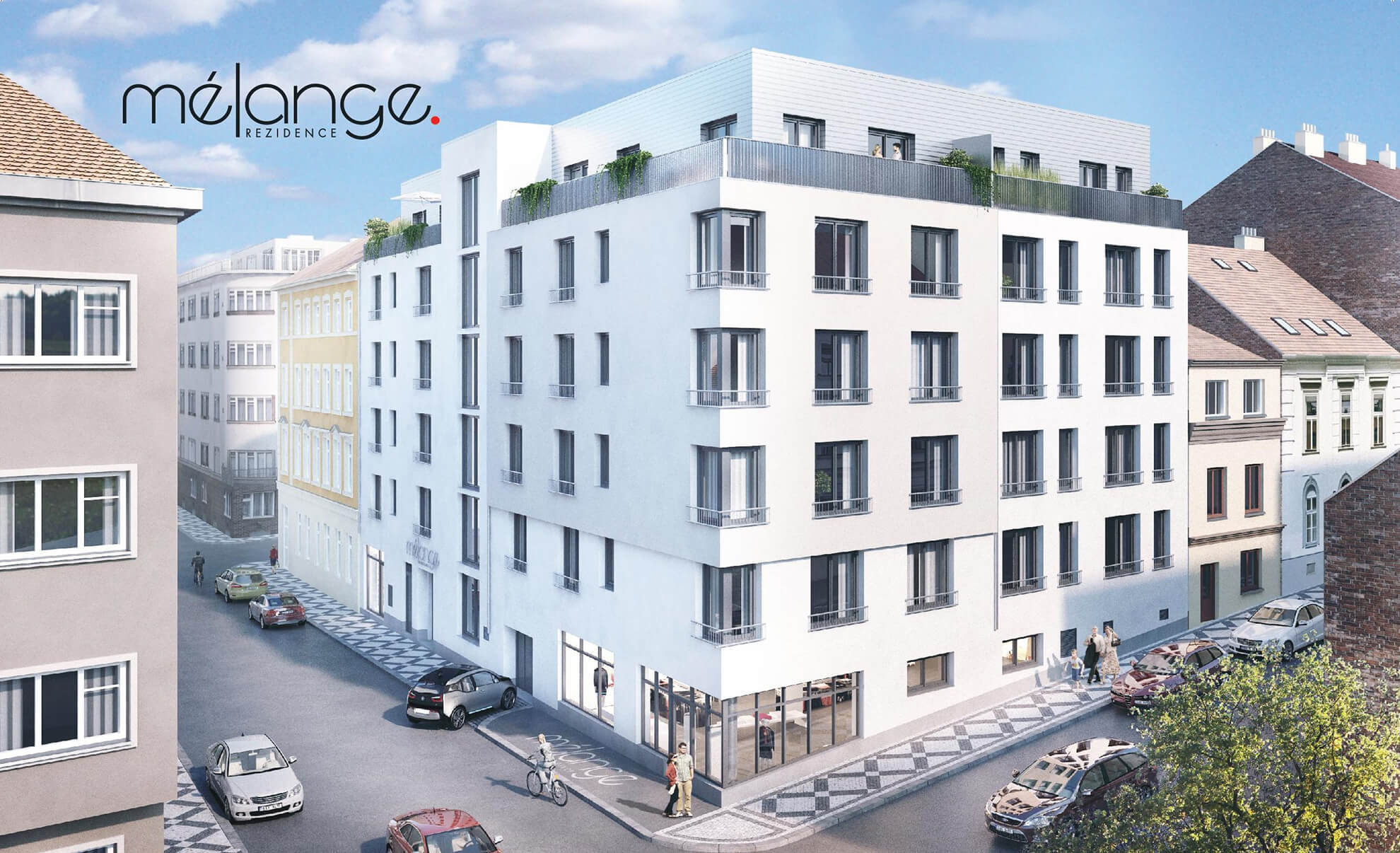
Rezidence Mélange, Praha 5
So there are developers in the Czech Republic who are prepared to sell apartments for cryptocurrency.
Absolutely.
Where Developers Get Money for Construction
There is a common belief that developers build either with their own money or with buyers’ money. In other words, they first sell apartments, receive payments, and only then pay contractors. How does it actually work?
The developer is perhaps the poorest participant in the entire real estate development chain.
Their task is to create the product from the original idea through to handing the keys over to the end buyer. At the same time, it is the developer who assumes the greatest risks.
As a rule, at the initial stage we bring in investors who help finance the acquisition of the land. Sometimes an investor comes to us with a property already in hand and proposes developing the project together. This is called a joint venture.
We use both models.
Then there is the need to finance the construction phase itself. The developer also assumes obligations connected with buyers who purchase apartments with mortgages, including signing the relevant security agreements.
As a result, the developer is responsible for practically everything, but does not always have the largest amount of capital.
The real art is to complete the project, make a profit and at the same time minimize the use of your own capital, because it is the most expensive.
So first the developer brings in an investor to buy a plot or an old building for redevelopment. Then the parties agree on the partnership structure. For example, they establish a joint company in which each holds a certain share. Is it possible for the investor to become a secured creditor of the property?
There are many financial structures.
I suggest thinking of money primarily as a tool. The developer’s objective is not to raise the maximum possible amount of money, but to enter the right project on the right terms.
You need to find the right location, choose a property that can be improved, and create added value.
We begin earning money at the project-entry stage because we understand where and what should be purchased.
Raising financing is just as much a routine task for us as preparing project documentation or obtaining a building permit.
So I would not attach exceptional importance to financing. The main thing is to choose the right project. Structuring funds from different sources is simply a tool for implementing it.
Why Building Permits in the Czech Republic Take Years
After purchasing a plot, the design process and obtaining building permits begin. How long can this process take? What is your personal record?
We are currently building the Rezidence Level Mladá Boleslav project. Construction started last year, but I bought the land back in 2017.
That makes eight years.
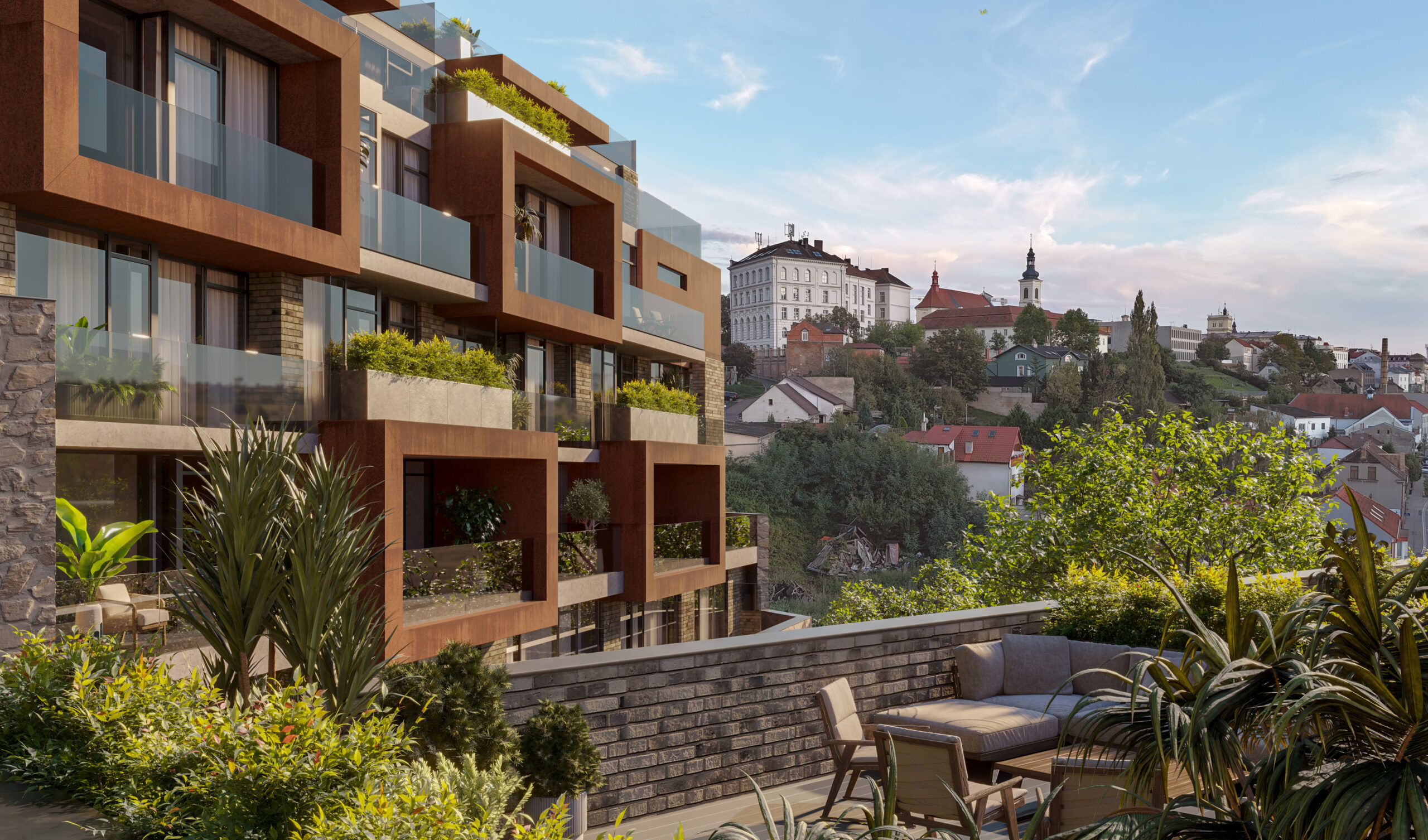
Rezidence Level Mladá Boleslav
And this is Mladá Boleslav. I thought permits took longer in Prague and things moved faster in the regions.
That is a misconception.
There are cases where a building permit in Prague can be obtained in two years. But there are also projects where approvals take 13-15 years.
The length of this process has a direct impact on the final cost of the property.
The same legislation applies in every city in the Czech Republic. Of course, there are local specifics, but overall the permitting procedures are similar.
Is it true that obtaining a building permit requires connections in the local administration? For example, knowing the mayor and regularly meeting him over a beer?
If you went out for a beer with everyone, there would be no time left for work or rest.
I know that some Chinese corporations have dedicated employees whose job is specifically to maintain such informal relationships.
I actually have someone like that as well, although not as a full-time employee.
Seriously speaking, every stage of a project requires interaction with people. You need to be able to negotiate, take the interests of different participants into account and find common ground.
That is a major part of a developer’s professional know-how.
So who is to blame for developers having to wait ten years before they can start construction?
If we knew the definitive answer, we would have solved the problem long ago.
There are many reasons.
First of all, the Czech Republic has a complex, multi-level building-permit system. More than fifty different parties are involved in the process and the project has to be coordinated with them.
At the same time, the situation is constantly changing.
Before 2012, obtaining permits was easier. Over the past ten years, legislation, government priorities and urban-planning documents have changed repeatedly.
Prague has adopted a new Metropolitan Plan. It creates certain risks, but at the same time opens up new opportunities for the city’s development.
Another change to construction legislation is also under discussion. The new law was expected to take effect on January 1 of the following year, but at the time of our conversation there was still no final clarity.
Another serious problem is the shortage of staff in building authorities.
Imagine an office that should have eight specialists on staff but actually has only three. Obviously, with that workload, document-processing times increase.
It is a complex problem that requires systemic solutions.
I think the government understands how serious the situation is. The Czech Republic is approaching a delayed crisis caused by a shortage of housing.
So real estate is not created only from concrete and other building materials?
Exactly.
Real estate is created above all through expertise and a willingness to take risks. Money and other financial resources are merely tools required to create the final product.
“Real estate is created above all through expertise and a willingness to take risks. Money is merely one of the tools.”
Pavel Malyshev, developer, owner of PrecoGroup
Bank Loans, Investors and the Real Risks of Construction
Let’s return to financing. Imagine that you and an investor have bought a plot, spent ten years obtaining permits and can finally build. What happens next? Do you hire a general contractor, bring in individual construction companies, or look for new financing?
All of the above.
The developer’s job is to organize the work of a large number of project participants.
Once the permit has been obtained, the project documentation is further developed. A team of designers handles this.
At the same time, we arrange financing. In our case, this is usually provided by local banks.
At the same time, we select a general contractor, usually through a tender.
On some projects, we do not use a general contractor. Instead, we manage construction costs ourselves and hire individual companies to carry out specific types of work.
In addition, preparations begin for putting the project on the market. The future product has to be presented properly to buyers, marketing materials need to be prepared, and promotion has to be organized.
Am I right in understanding that apartment sales usually begin after the building permit is obtained but before construction starts?
It depends on the strategy.
Sometimes the bank requires presales as a condition for providing a construction loan. In that case, we begin selling apartments at an early stage.
If there is no such requirement and we are confident that we can complete the project, sales can be postponed.
Ideally, by the time the building is completed and approved for use, we should have very few unsold apartments left.
Entering the market later allows us to achieve a higher margin. However, choosing the optimal timing under current conditions is not easy.
What alternatives are there to bank financing?
You can use your own funds or bring in private investors.
Do you work with non-bank lenders?
Non-bank financing is interesting, but it is the most expensive money.
A bank loan provides two important advantages.
First, bank funds have a transparent source and are cheaper than private capital.
Second, a bank’s participation increases buyers’ confidence in the project.
The bank carries out thorough due diligence on the developer, the project participants and the financial model. If it agrees to finance construction, that means it considers the risks acceptable.
For a future buyer, this is an additional argument in favor of the project’s reliability and the likelihood that it will be completed.
I once tried to explain in a short video why buying an apartment in a bank-financed project can sometimes be safer than buying in a project without a loan. In the latter case, the developer may be building entirely with buyers’ money.
There are major developers in the Czech Republic that do not use bank financing for construction at all.
They have sufficient resources of their own, experience and market stability. Such companies are well known among the largest market participants.
They can use buyers’ money and operate without a bank loan.
But even when bank financing is available, a developer uses funds from different sources.
How are a private investor’s money and a bank loan combined within one project? A bank will usually not agree to rank second in the priority of security interests.
Exactly.
When a private investor enters a project, they want to secure the repayment of their funds. Collateral, guarantees and other forms of security are used for this purpose.
Before bank financing is brought in, the investor’s claims may rank first.
But when the financing bank enters the project, it requires its security interest to have first priority.
Banks are strictly regulated by the Czech National Bank and are not prepared to take on additional risk by accepting second-ranking security.
The investor therefore needs to understand from the outset that once bank financing is introduced, their claims may move into second position.
There are two possible scenarios.
Either the investor finances the project in full, including all preparatory and construction costs, or agrees to give priority to the bank.
Naturally, the second option involves additional risks for the investor.
Those risks are compensated by higher returns. A private investor usually receives a higher interest rate than a bank. Sometimes they may also expect additional benefits.
For example, the opportunity to receive some of the apartments at cost?
Such arrangements are possible too.
The parties can agree to transfer a certain number of square meters or provide other property-related benefits.
But it is important to understand that if the project fails, the investor may not receive the promised apartments either.
If additional guarantees are required, another property that is not directly connected with the financed project can be provided as collateral.
So that is why, in some new-build projects, certain apartments never appear on the open market at all.
Yes, that may be connected with agreements between the developer and investors.
How a Private Investor Can Invest in a Development Project
Let’s say I have CZK 20 million. Can I invest it in one of your projects?
That is a specific and interesting question.
I cannot publicly offer investment terms in the form of an open offer because such activity may fall under financial-services regulation and require the relevant licenses or structures.
For example, SICAV investment funds operate on the Czech market. Another possible instrument is the issuance of corporate bonds.
But in practical terms, an investor with CZK 20 million is certainly attractive to a small or medium-sized developer.
The terms of participation are always discussed individually.
One developer may propose implementing a project jointly through a joint venture. Another may offer participation through bonds. A third may use an alternative investment fund operating under § 15 or a more mature SICAV structure.
There are offers on the market with returns starting at 8% per year.
Some crowdfunding platforms pay interest monthly. For the developer, of course, it is more convenient to settle with the investor at the end of the project.
In the near future, we plan to create a separate section on our company website dedicated to possible mechanisms and conditions for investor participation in our projects.
You can learn more about Pavel Malyshev’s company on the PrecoGroup website.
Cooperative Housing in the Czech Republic: How Modern družstevní bydlení Works
I know that you also develop cooperative housing projects, or družstevní bydlení. I support modern housing cooperatives and often explain to buyers that this form of acquiring housing does not necessarily involve greater risk. But people read information online, get scared and decide not to buy. Why does a developer need this model at all?
Modern cooperative housing differs from the system that existed before the large-scale privatization of the housing stock in the 1990s.
Today, a housing cooperative is primarily a tool for financing the acquisition of real estate, an alternative to an individual mortgage.
A cooperative is established and purchases a certain number of apartments from the developer. That may be five or ten apartments, or an entire building.
We, for example, work with cooperatives that purchase an entire project.
The cooperative becomes our partner and assumes obligations toward the bank for financing the property acquisition.
Instead of every buyer having to prove to the bank individually that they have a down payment, demonstrate the source of their funds and show sufficient income, the cooperative handles the financing issues.
The buyer becomes a member and receives a cooperative share, known in Czech as družstevní podíl.
That share is linked to the right to use a particular apartment under a tenancy arrangement.
The cooperative member makes monthly payments, which are used, among other things, to repay the loan obtained by the cooperative.
From the developer’s perspective, is it as though one large client arrives instead of many individual buyers and purchases all the apartments at once?
Exactly.
After the purchase, the cooperative handles the recruitment of members and its subsequent relationships with them on its own. The loan repayment period may, for example, be set at 30 years.
But there is another important advantage for the end buyer.
When a cooperative approaches a developer and offers to buy 30, 50 or 69 apartments at once, its negotiating position is considerably stronger than that of an individual buyer.
In our project in Mladá Boleslav, the cooperative offered to purchase all 69 apartments as a single package.
With a purchase of that scale, it is possible to negotiate a better price.
A cooperative is not created to make a profit, but to provide housing for its members. The terms for acquiring an apartment through a cooperative can therefore be more attractive than those available through individual negotiations with the developer.
But could a situation arise in which a cooperative has too many members who cannot meet their payment obligations? What happens if they stop making their monthly payments?
As a rule, modern cooperatives are not established without the involvement of experienced organizations.
They are often backed by large housing cooperatives that already manage substantial housing portfolios and have the necessary experience and financial reserves.
Every cooperative has statutes defining the procedure to be followed if arrears arise.
If several members stop making payments, the cooperative is usually able to cover the temporary shortfall from its reserves and take steps to recover the debt.
A completely different situation arises if non-payment becomes widespread and the cooperative faces the threat of bankruptcy.
That is the most serious risk in the entire structure.
However, as far as I know, there have not yet been cases like this in Czech legal practice.
Cooperatives generally operate conservatively.
In addition, members make an initial contribution that may amount to 25-30% of the apartment’s price. That alone indicates a certain level of financial capacity.
Professional management allows the cooperative to respond to arrears in a timely manner. In some cases, a defaulting member’s share can be sold on the market or transferred to another member of the cooperative in order to offset the losses incurred.
So it is important for buyers to study the cooperative’s statutes carefully and not put their last available money into the purchase. We will discuss the legal, financial and tax aspects of cooperative housing in more detail with tax consultant Sofia in the next episode of the podcast.
Why Apartment Prices in Prague Are Rising
You often see claims online that developers are profiting at buyers’ expense and that property prices keep rising because of their greed. Looking at the market as a whole, is there any reason to believe that Prague has developed a price bubble?
As on the stock market, there are certain indicators that can be analyzed.
I do not believe there are grounds to talk about a bubble at the moment.
Several main factors affect real estate prices. First and foremost are the balance between supply and demand and inflation.
Who creates the demand? I often work with foreigners and hear the view that without foreign buyers the Czech real estate market would have collapsed long ago. Before 2014, Russians actively bought apartments; since 2022, Ukrainians have arrived. But I do not agree that the market depends exclusively on foreigners. Who do you sell your apartments to?
The Czech real estate market is largely oriented toward domestic buyers.
Looking at the overall statistics, around 80% of real estate, including residential and commercial property, is purchased by domestic investors.
So it is incorrect to say that foreigners are saving the market from collapse.
Moreover, foreign buyers can sometimes destabilize the market through their behavior.
Someone who has only recently arrived in the country does not always understand the true value of real estate. Unscrupulous intermediaries may take advantage of this and sell them an apartment at an inflated price.
Such buyers may run into problems later.
And who are these domestic investors? Large investment funds, or ordinary Czech families, such as a doctor and a lawyer who already own a home and want to buy a small apartment for their child or commercial premises to rent out?
There are different categories of buyers in the market.
There are professional participants, including investment and housing funds.
In addition, developers themselves are increasingly becoming participants in the rental market.
Today, we see many properties that are built from the outset not for sale. A developer may retain the property or construct a building for an investor who plans to rent out the apartments.
Such properties do not enter the open market, even though construction is completed and the real estate effectively moves into investment use.
But ordinary local buyers also play an important role.
The Czech market is fairly conservative and stable. Many families have savings that allow them to purchase additional housing, including with the help of a mortgage.
These buyers may be doctors, lawyers, police officers, employees of large companies and people from other professions.
The demand side is clear: it is fairly strong and largely domestic. What is happening with supply? Is Prague building enough new apartments?
On the supply side, the market is also fairly conservative.
Looking at construction volumes, you could say that we are operating practically at subsistence level.
Approximately 3,500-5,000 apartments in new developments are built in Prague each year.
At the same time, the city has around 600,000 apartments.
For the sake of calculation, let us assume a residential building has a lifespan of 100 years, although panel buildings were originally designed for lifespans of around 50-80 years.
Simply to renew the existing housing stock, around 1% of the total number of apartments needs to be built each year.
For Prague, that is approximately 6,000 apartments annually.
And so far we are talking only about replacing housing that is gradually aging.
Population growth, migration, rising incomes and people’s need for additional property must also be taken into account.
That requires another approximately 1% of the housing stock each year.
In other words, we are building two, and sometimes three, times fewer apartments than are needed to satisfy the natural demand for housing.
That is why supply is failing to keep up with demand, creating the conditions for further price growth.
So in the next five to ten years, could we see an ordinary one-room apartment in a panel building costing eight million Czech crowns?
I very much hope that the market changes direction and the pace of construction increases.
I would like us to be able to at least double construction volumes over the next ten years.
But I cannot rule out the possibility that we really will see a panel-building apartment costing eight million Czech crowns.
“I cannot rule out the possibility that we will see a panel-building apartment for CZK 8 million.”
Pavel Malyshev, developer, owner of PrecoGroup
Can New Construction Laws Help Lower Housing Prices?
Do you hope that changes to construction legislation and Prague’s new Metropolitan Plan will help shorten project approval times and make developers’ work easier?
To a certain extent, yes.
The main advantage is that there will be greater stability and predictability in legislation and urban planning.
But many other factors also need reform.
We should not expect the adoption of a new construction law and the Metropolitan Plan to immediately increase construction volumes to 15,000 apartments per year.
I suspect that what is missing for a real improvement in housing affordability is political will. After all, almost two thirds of the Czech population live in property they own or in housing owned by their families. And these people are unlikely to be interested in seeing the value of their apartments fall.
I would not say that real estate prices need to fall.
Real estate is a conservative asset whose value generally increases over the long term at least in line with inflation.
Even if we begin building two or three times more housing, that will not necessarily cause existing apartments to lose value.
Other factors would also have to be at work for prices to fall significantly.
What Mistakes When Buying a New-Build Apartment Can Cost an Investor Money?
To finish, give buyers and investors some bad advice. What should someone do if they want to guarantee that they lose money on real estate?
Perhaps the worst advice would be to start developing property independently without having the necessary expertise.
For example, an investor who has never worked in this market decides to build or redevelop an apartment building from scratch.
Another risky option is to buy an apartment before redevelopment and then encounter the unreliability of a small construction company, particularly when warranty obligations become an issue.
Do not make mistakes like these. When buying a new-build apartment, you can contact us for transaction support. It is a relatively inexpensive service that helps buyers feel more confident and avoid many problems.
The conversation with Pavel Malyshev provided a closer look at how a development project works from the inside: from selecting a plot and attracting investors to construction, apartment sales and handing the keys over to buyers.
Watch the Full Interview with Pavel Malyshev About Real Estate in the Czech Republic
In the video version of the interview, you can watch the full conversation between Pavel Malyshev and Alesya Bigun about the Czech real estate market, new-build construction, investment and the outlook for apartment prices in Prague.