


How to furnish an apartment for rent in the Czech Republic
How to furnish an apartment for rent in the Czech Republic is not a matter of taste, but a matter of the property’s liquidity, the speed of move-in, and the owner’s future expenses. At Get Home, we do not proceed from abstract design, but from market logic: a Czech rental apartment most often has to be ready for normal everyday life already on the day the keys are handed over. At the same time, there is no need to overload it with furniture and random purchases. It is much more important to give the tenant a clear base, and leave everything personal and hygiene-related to them.
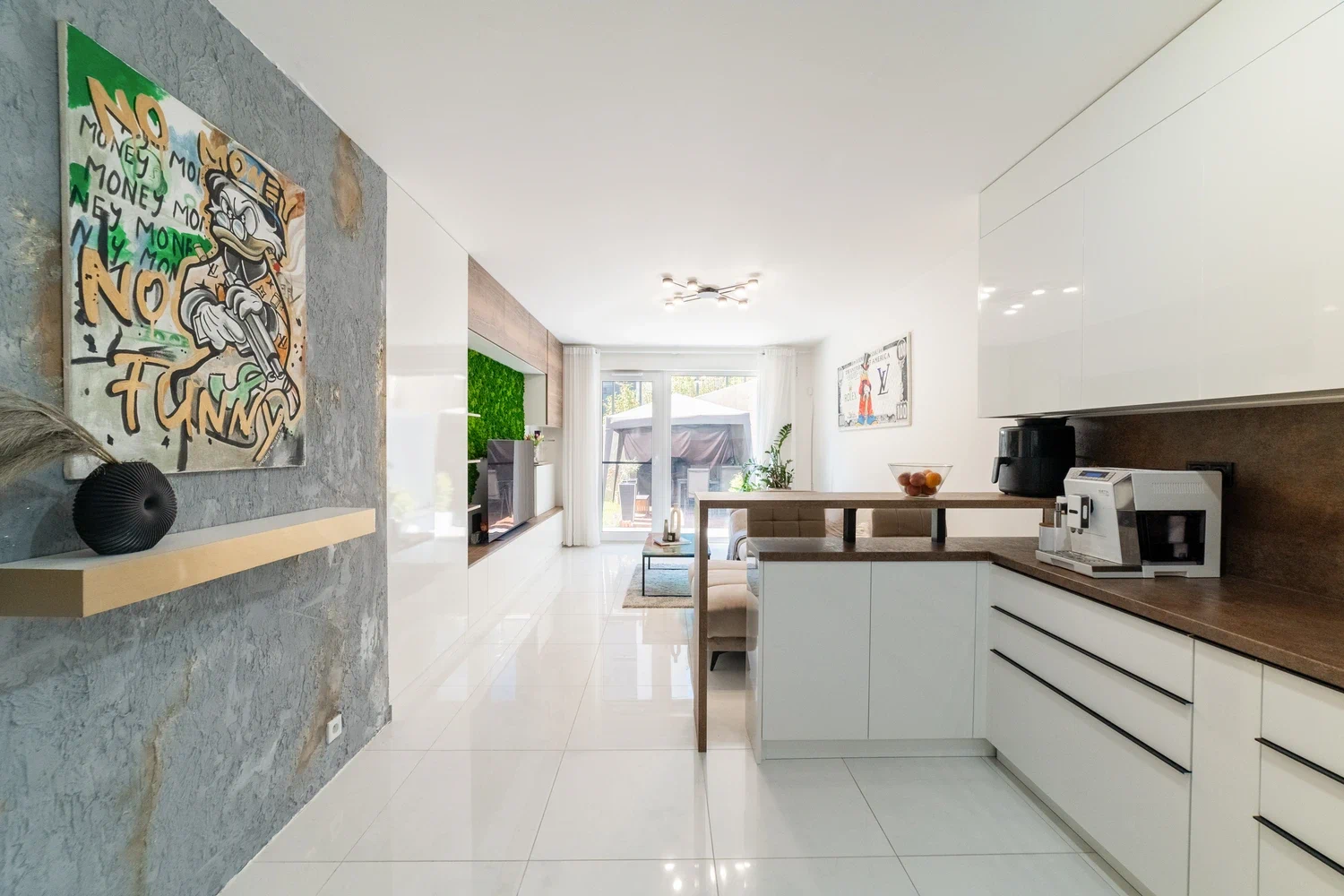
How to furnish an apartment for rent in the Czech Republic
This approach is especially relevant now, when the housing market in the Czech Republic is once again in a growth phase. According to ČNB, the residential property price index in Q1 2025 rose by 10% year-on-year, and according to ČSÚ, the average apartment price in the Czech Republic in 2024 reached CZK 63,521 per m², and in Prague, CZK 115,889 per m². When the cost of entering an asset rises, every furnishing mistake begins to directly affect payback and the apartment’s vacancy period.
We have already written in a Get Home article about price growth and the ČNB’s position that the market is being supported not by one but by several factors at once: limited supply, the high cost of buying one’s own home, and the overall shortage of quality properties. Against this background, it is not the apartment that “has everything” that wins, but the one where the owner has correctly matched the level of furnishing to their tenant segment.
Apartment for rent in the Czech Republic: does it need to be furnished at all
Our answer is usually this: yes, but sensibly. The Czech Republic is not Germany, and on the local market an empty apartment without a kitchen, basic appliances, and at least minimal storage often loses out in demand. For long-term rentals, tenants do not expect a “hotel,” but a functional base they can move into quickly without additional major expenses. This market logic is also confirmed by industry publications: Novinky.cz directly notes that apartments for long-term rent are easier to let if they already have a basically equipped kitchen, a refrigerator, and often a washing machine.
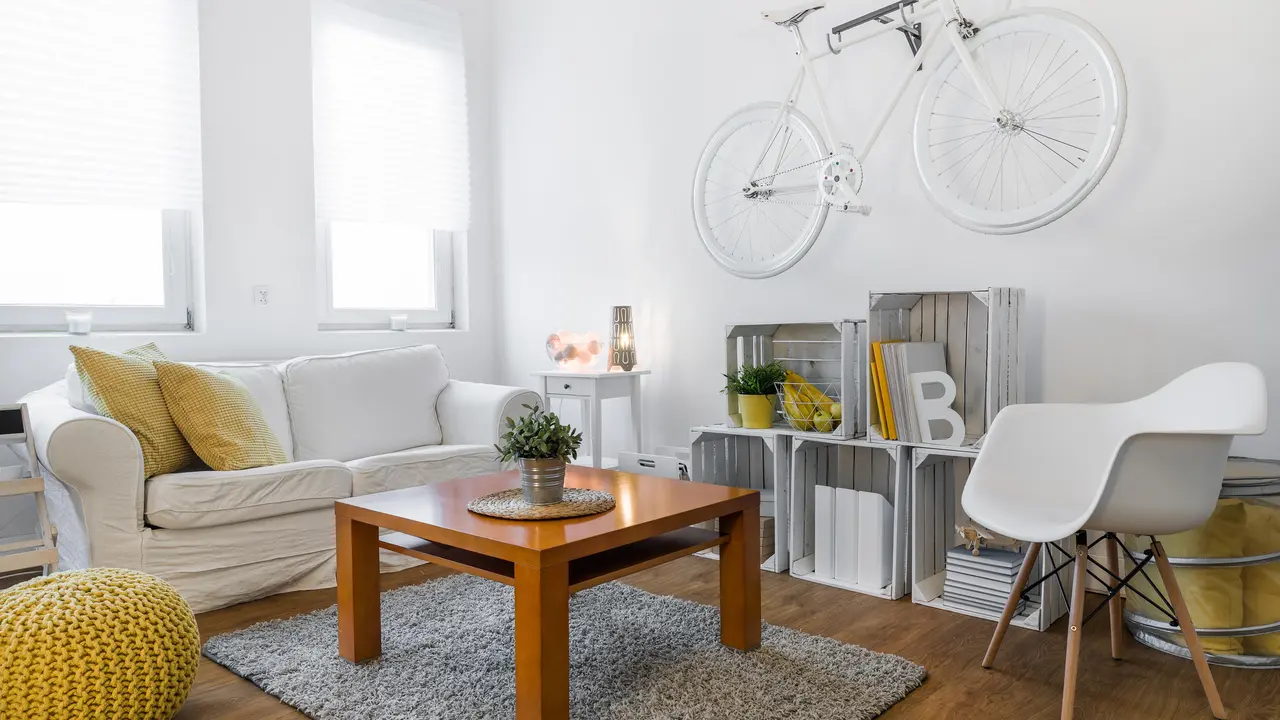
Source: Novinky.cz – Byt určený pro krátkodobý pronájem má být plně vybavený, měl by být fotogenický a ideálně vzbuzovat onen wow efekt.
But furnishing should not be the same for all properties. In a quality new building in a good area, the audience is usually more demanding. There, a person compares your property not with a “bare” apartment, but with other neat listings that already have a built-in kitchen, a proper wardrobe, quality lighting, a washing machine, sometimes a dishwasher, and a drying function. In a panel building on the outskirts, the logic is different: here practicality, neatness, and an adequate price matter more than decorative effect.
At Get Home, we recommend looking at furnishing as part of positioning. Good equipment should increase the chances of quick move-in, but it should not turn the apartment into a warehouse of unnecessary items, for the wear and replacement of which the owner will later have to pay. That is exactly why we almost never advise buying “everything on the list.”
There is also another market context. According to ČSÚ, 33,557 apartments were completed in the Czech Republic in 2025, and in Prague, according to preliminary ČSÚ data, 5,303 apartments were completed during all of 2025, which is lower than the 2024 result. This means supply is not expanding radically enough, and tenants still choose from a limited number of properties. In such a situation, a clear, well-put-together, and honestly equipped product wins.
Minimum equipment for a rental apartment
If we speak about the basic standard that we recommend most often, it is a kitchen with a refrigerator and stove, at least one spacious wardrobe, and a washing machine. This is the minimum that covers the tenant’s basic living scenarios while not overloading the owner’s budget. This exact level of equipment most often provides the right balance between convenience and expenses.
For more expensive projects and areas, the standard is usually higher. There we advise adding a dishwasher, and if the area and budget allow, appliances with a clothes-drying function as well. This is no longer luxury for the sake of appearances, but an argument for a more solvent audience that values household comfort and more often makes decisions faster if the apartment frees them from everyday compromises.
At the same time, there are things that we deliberately do not recommend buying. Mattresses, dishes, bed linen are hygiene and personal items. They quickly lose their appearance, raise more questions when the apartment is handed over, and rarely increase the property’s long-term value. For the same reason, we usually do not include small household appliances: toasters, irons, hair dryers, mixers, vacuum cleaners. All of this increases the number of small breakdowns and the owner’s points of responsibility, but does not create a decisive advantage when renting out.
Let us also say a separate word about the sleeping place. If the layout allows, a full bed is better than a sofa bed. This is especially important in apartments rented to one person or a couple for the long term. A sofa seems like a universal solution, but in everyday life it almost always loses to a bed in comfort, and therefore in the perception of the apartment as a whole.
Furnishing a rental apartment by target audience
One of the most common mistakes owners make is designing the apartment “for themselves.” What the owner likes is not always what the tenant needs. That is why at Get Home we start not with the sofa and not with the color of the kitchen fronts, but with the answer to the question: who exactly will live here.
If it is a studio or 1+kk in a good location, near the metro, business centers, or a new residential project, the audience is usually looking for a quick and comfortable move. Here built-in solutions, good storage, neat lighting, a unified visual style, a proper bed, and appliances that do not feel temporary are important. A dishwasher and a quality washing machine will be an additional plus, and if possible, a clothes-drying function as well.
At the same time, in more spacious apartments, especially 3+kk and larger, we usually do not recommend overloading the interior with furniture. On the contrary, it is better to leave more free space and visual air. The more ready-made life scenarios the owner rigidly builds into the apartment, the narrower its target audience becomes.

Furnishing a rental apartment by target audience
For example, if one room is fully furnished as a children’s room, the apartment may already be less suitable for a couple of adults who need separate home office rooms. And vice versa, if all rooms are predefined only for adults, the property will become less convenient for a family with children. That is why in larger apartments universality is often more important than complete furnishing: it helps expand the circle of potential tenants and find the right resident faster.
This approach also fits well with the broader demographic logic. According to ČSÚ, the average gross salary in Prague in Q4 2025 reached CZK 64,980, while in the Czech Republic as a whole it was CZK 52,283. The difference in incomes also means a difference in tenant expectations: in more expensive areas, people more often pay not only for the address, but also for the convenience of everyday life.
How to prepare an apartment for rent and not overpay
Preparing an apartment for rent almost always begins not with furniture, but with finishing. We recommend durable and neutral solutions: white walls, vinyl or quality laminate, ceramic tiles in wet zones, a minimum of unnecessary details, calm textiles on which the slightest stains are not visible. This approach makes the apartment look cleaner, easier to refresh between tenants, and cheaper to operate over time.
Neutrality in this case does not mean boredom. On the contrary, it helps the apartment stay relevant-looking for longer. The fewer controversial decorative choices in the interior, the easier it is for a potential tenant to imagine themselves in this space. And the less likely it is that in two years the owner will have to redo the apartment from scratch just because the interior has become morally outdated.
From the point of view of market practice, this is also justified. Novinky.cz writes that for long-term rent, a universal, timeless design designed for intensive use works better, and that it is wiser to save on easily replaceable elements rather than on critically important units such as the bathroom, utility lines, kitchen appliances, or quality of workmanship. We fully agree with this logic.
Hence our practical advice: it is better to save not on what is difficult to replace, but on what can be calmly updated without major renovation. A good cabinet wardrobe is more important than random decor. A proper washing machine is more important than a fashionable light fixture. A quality kitchen is more important than a set of useless accessories. When a rental apartment is put together exactly this way, it works longer and more predictably.
Renovating a rental apartment: when it is worth turning 1+kk into a 2+kk format
If a 1+kk can be competently divided into a 2+kk, we usually recommend considering this option. On the Czech market, small but logically organized layouts are often perceived better than one open space without clear zone separation. For part of the audience, a separate bedroom or at least an isolated sleeping zone is already a different level of comfort, and therefore a different level of demand.
But here it is important not to oversimplify. You cannot always divide an apartment “on paper.” You need to take into account daylight, ventilation, real usable floor area, and technical limitations. Czech standards traditionally tie a living room to requirements for lighting, ventilation, and minimum area; in the old standard ČSN 73 4301 it is directly stated that a living room must have at least 8 m², sufficient daylight, and ventilation, and current building requirements also maintain an emphasis on daylight and ventilation of internal building spaces.
Therefore, the right question is not “can a partition be installed,” but “will the apartment preserve housing quality after redevelopment”. If yes, then the division can indeed increase the property’s liquidity. If not, it is better to leave a good, bright, and honest 1+kk than to get a compromise pseudo-two-room apartment that tenants will perceive as an unfortunate compromise.
Interest in compact formats on the market is indeed growing. Seznam Zprávy wrote in 2025 about growing interest in micro-apartments and that the market is gradually accepting smaller floor area for the sake of a better location and functionality. But that is exactly why the layout must be especially well thought out: the smaller the footage, the more expensive every mistake becomes.
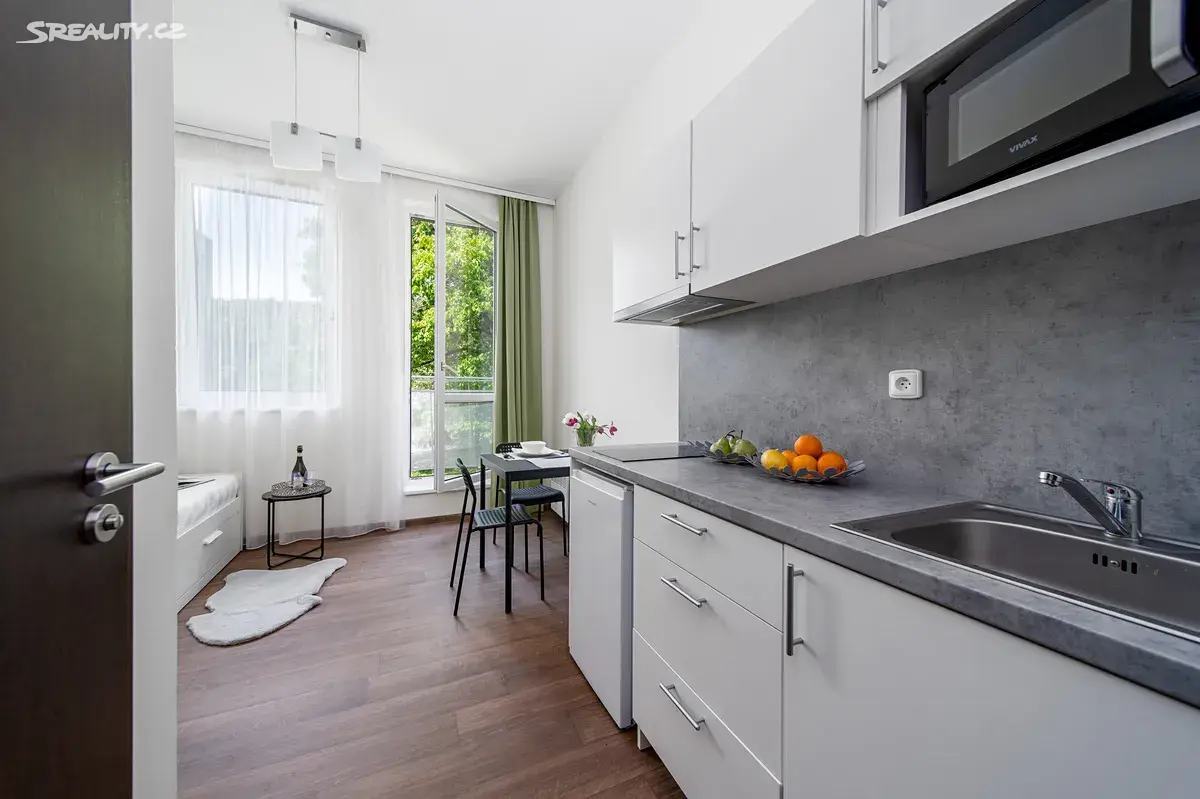
Source: Seznam Zprávy – growing interest in micro-apartments
Furnishing an apartment for rent: what we recommend in practice
In practice, what works best is a calm, repairable, and easy-to-maintain standard. That is exactly why for all projects we often choose IKEA solutions: this is a sufficiently high-quality and durable base in which it is easier to replace individual parts, fronts, or fittings without completely dismantling all the furniture. For a rental apartment, this is especially important because the property must not simply look good in photos, but survive several rental cycles with minimal restoration costs.
A separate advantage of IKEA is connected with timing. For rental real estate, this is a critically important factor, because apartment vacancy directly means loss of money for the owner. In real conditions, an IKEA kitchen can be installed in about a week, whereas for many other kitchen studios delivery times usually start from 8 weeks. For rental purposes, the difference is colossal: an extra 7 weeks of waiting can cost the owner far too much. That is why when equipping an apartment, we look not only at the price and appearance of the furniture, but also at how quickly the property can be prepared and brought to market.
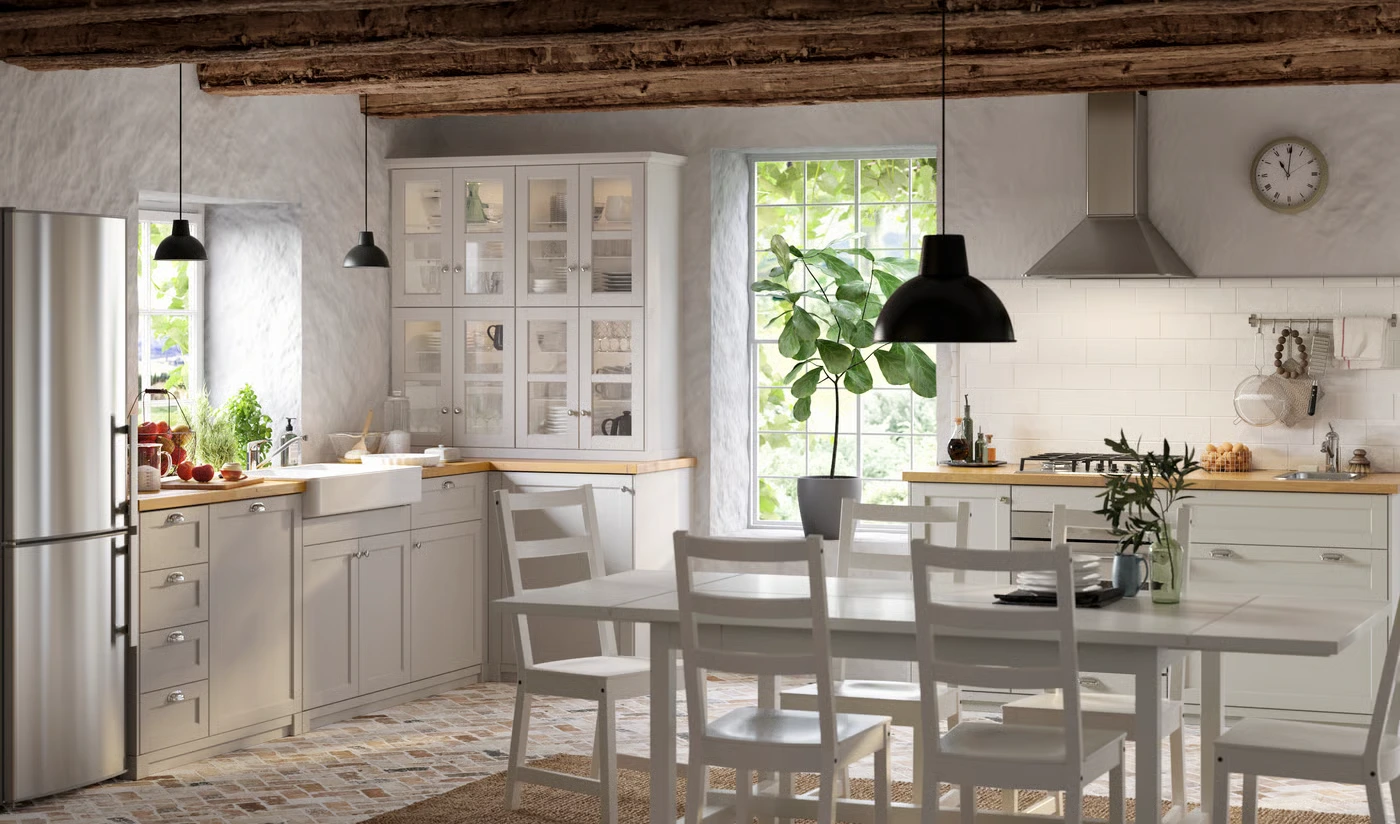
Source: IKEA catalog – Bílé kuchyňské skříňky
In the expensive segment, we complement this basic approach with a stronger built-in component, better appliances, and more refined detailing. In the mid-range segment, we focus on understandable equipment and durable materials. In the budget segment, simplicity almost always wins: fewer decorative elements, fewer complex surfaces, fewer items that break or quickly lose their appearance.
If the owner wants to fully remove the task of furnishing from themselves, at Get Home it is possible to order a complete setup of a 1+kk for rent. Our benchmark for this format is CZK 215,000, including furniture, labor, cleaning, and garbage removal. For some investors, this is more convenient than assembling the apartment piece by piece, separately searching for contractors, delivery, and supervision. In this option, what matters most is not the bill itself, but the predictable result: the property reaches the market faster and without a cascade of small finishing adjustments.
The main thing we advise owners is not to confuse full furnishing with excessive furnishing. A good rental apartment should not be overloaded, but leaving it too empty is also not always profitable. We recommend doing the kitchen with appliances and wardrobes in any case, because this is the basic standard for the Czech rental market. If this foundation is already there, then for a more complete and attractive furnishing setup, usually only the bed frame, table, and chairs are missing.
Such an additional investment amounts to about 20,000–30,000 crowns, but in practice it often justifies itself very quickly: the apartment looks more attractive in advertising, finds a tenant faster, sometimes several weeks earlier, and is often rented out a little more expensively, even if the increase is only CZK 1,000–1,500 per month.
In total, thanks to reduced vacancy and a slightly higher rental rate, these expenses can pay off already in the first year of renting out, and after that work for several more years as net profit for the owner.
Conclusion
Furnishing an apartment for rent in the Czech Republic is worth it, but only within the logic of the specific segment. The basic minimum is almost always justified: a kitchen with appliances, storage, a washing machine, proper finishing, and durable materials. Further equipment depends on the location, the level of the building, the square footage, and your target audience.
We recommend looking at furnishing as an investment decision. Do not buy unnecessary things, do not save on what is critically important, do not make the apartment “for yourself,” and do not turn a rental property into a showroom. Then the apartment will work the way investment real estate is supposed to work: be rented out faster, keep its appearance longer, and require fewer chaotic expenses between tenants.